The Council agreed during the first day of the Competitiveness Council currently bein held in Brussels on a general approach for a Regulation aimed at improving the mutual recognition of goods marketed in another member state.
The EU harmonisation legislation sets out common requirements on how products have to be manufactured. This is for example the case of toys, cosmetic products or pyrotechnical articles.
However, there is a wide range of consumer goods such as textile, footwear, childcare articles, jewellery, tableware or furniture, that are not subject to the EU harmonisation legislation or that are only partially covered by it. The new regulation will apply to these goods.
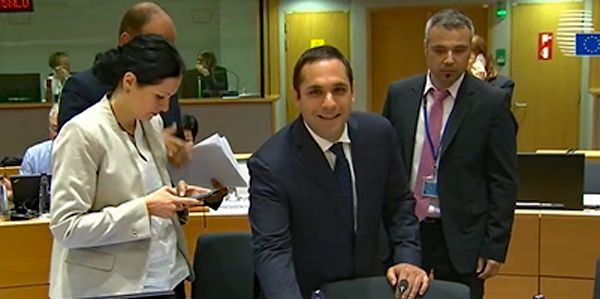
“We have still to overcome a number of artificial barriers in various areas of the internal market. Many of them are a result of the application of different rules in non-harmonised sectors or poor implementation of mutual recognition principles. Today’s agreement will help promote the freedom of movement of goods in the internal market, and therefore facilitate market access for our companies, which will in the end benefit all European consumers,” Emil Karanikolov (Minister for the Economy of Bulgaria) said.
The general approach on this field enables the Council to start negotiations with the European Parliament (EP) once the EP has agreed its own position. A vote in the EP’s internal market committee is scheduled after the Summer break.
The problem
Where there are no EU common rules or when goods are only partially covered by those rules, member states remain free to adopt their national technical rules laying down requirements to be met by those goods. Those requirements may refer for example to designation, form, size, weight, composition, labelling, packaging, etc.
The existing legislative framework does not ensure a reliable application of the principle of mutual recognition, since market access to goods which are considered safe and in line with the public interest in one member state, may be denied or restricted in another. Consequently, businesses face unwarranted costs and delays, because they have to adapt their goods to the various requirements of national markets.
Karanikolov said that this Regulation is a priority for the Bulgarian rotating presidency of the EU as part of the path towards an actual European single market.
Changes to improve the free circulation of goods within the EU
The draft Regulation includes a number of improvements to the application of the principle of mutual recognition, including:
1.- Clarification of the scope of mutual recognition.- This will increase legal certainty for businesses and national authorities as to when the principle of mutual recognition can be applied.
2.- Introduction of a self-declaration.- This declaration will make it easier to demonstrate that goods have already been lawfully marketed in a member state. This is meant to enable economic operators to benefit from the use of such a declaration within the framework of assessment of goods in question.
3.- Pproblem-solving procedure.- The aim is providing practical solutions to citizens and businesses regarding the compatibility of an administrative decision denying or restricting market access with the principle of mutual recognition. The use of this non-judicial mechanism will make the application of the principle by businesses and national authorities easier.
4.- Efficient administrative cooperation.- Thi will help to enhance the exchange of information and trust among national authorities, therefore helping in the application of the principle of mutual recognition.
Image over the headline.- Customs controll at Rotersand (Germany). Image by Garitzko [Public Domain], from Wikimedia Commons.