The agreement was reached by states attending the 39th International Civil Aviation Organization (ICAO) Assembly which concluded today in Montreal (Canada). ICAO’s 191 member states agreed to implement a Carbon Offset and Reduction Scheme for International Aviation (CORSIA).
The global aviation network currently manages some 10 million passengers and 100,000 flights daily, with international aviation contributing 1.3% a year to global manmade CO2 emissions.
CORSIA is the first global carbon reduction scheme covering an entire industrial sector.
ICAO is the United Nations specialised agency uniting and coordinating member states’ action related to the aviation industry and trafic.
ICAO Council President welcomes the agreement
“It has taken a great deal of effort and understanding to reach this stage, and I want to applaud the spirit of consensus and compromise demonstrated by our Member States, industry and civil society,” remarked ICAO Council President Olumuyiwa Benard Aliu. “We now have practical agreement and consensus on this issue backed by a large number of States who will voluntarily participate in the GMBM (global market-based measure) and from its outset. This will permit the CORSIA to serve as a positive and sustainable contributor to global greenhouse gas emissions reduction.”
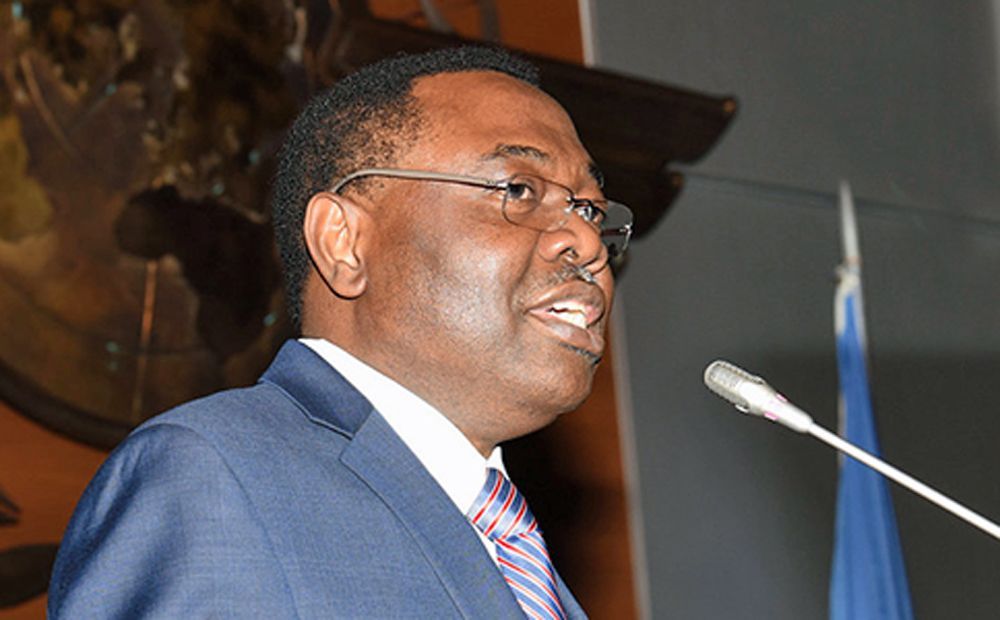
“The path to an MBM for international aviation has been a complex one, for all concerned, but it has also been a process characterized by a high-level of political will and a clear motivation among State and industry parties to realize a practical and consensus-driven global approach. Already, States responsible for some 80% of international flights have volunteered to participate in the GMBM from 2021” stressed Aliu.
“Significant progress has been achieved by ICAO and its Member States since 2010 to realize the sector’s goal of carbon neutral growth from 2020. These include innovative technologies, streamlined operations and procedures, and sustainable alternative aviation fuels” commented ICAO Secretary General Dr. Fang Liu, who elaborated further that given the global system’s tendency to double in flight and passenger volumes once every 15 years, a need is recognized for an MBM to complement the wide-ranging measures.
A needed but just complementary carbon reduction scheme
ICAO’s Carbon Offsetting and Reduction Scheme for International Aviation is designed to complement the basket of mitigation measures the air transport community is already pursuing to reduce CO2 emissions from international aviation. These include technical and operational improvements and advances in the production and use of sustainable alternative fuels for aviation.
Implementation of the CORSIA will begin with a pilot phase from 2021 through 2023, followed by a first phase, from 2024 through 2026.

Participation in both of the two first early stages will be voluntary and the next phase from 2027 to 2035 becomes mandatory for all ICAO member States.
Some exemptions were accepted for Least Developed Countries (LDCs), Small Island Developing States (SIDS), Landlocked Developing Countries (LLDCs) and States with very low levels of international aviation activity.
To ensure that CORSIA is fair and without market distortions, the scheme will include provisions to deal with special circumstances such as those of fast-growing airlines and airlines which have already made significant investments to improve environmental performance.
Along with this global market-based measure, the industry will continue to drive its four-pillar strategy on climate change, comprising improvements in technology, operations and infrastructure, complemented by CORSIA, IATA pointed today.
IATA welcomes CORSIA
The International Air Transport Association (IATA) welcomed the agreement on CORSIA reached today, but points that this scheme alone will not lead to an effective reduction in CO2 emissions by the industry.
IATA represents some 265 airlines comprising 83% of global air traffic.
“This agreement marks the end of the process to gather the political will to implement a global market-based measure for aviation. There is still a lot of technical work to ensure effective and efficient implementation; and to ensure the environmental integrity and administrative simplicity of the scheme. In the coming years we will be working closely with ICAO on capacity-building both for regulators and the industry,” said Alexandre de Juniac, Director General and CEO of IATA .
“The historic significance of this agreement cannot be overestimated. CORSIA is the first global scheme covering an entire industrial sector. The CORSIA agreement has turned years of preparation into an effective solution for airlines to manage their carbon footprint. Aviation is a catalytic driver of social development and economic prosperity. It is the business of freedom making our world a better place. This agreement ensures that the aviation industry’s economic and social contributions are matched with cutting-edge efforts on sustainability. With CORSIA, aviation remains at the forefront of industries in combatting climate change,” said IATA Director General and CEO.

“The enthusiasm and commitment of states in the voluntary period is impressive. Even states that would normally not be required to participate, small island nations and developing economies, have shown their commitment by signing up. The list of states volunteering for the first phase now numbers 65, giving CORSIA which we estimate will cover more than 80% of growth post 2020. And we continue to encourage more states to join,” said de Juniac.
“Today’s agreement shows what can be accomplished when we work together. The aviation industry understands that sustainability is critical. Airlines will continue to invest in new technology, particularly new aircraft and sustainable alternative fuels, to improve their environmental performance. And we will continue to ask governments to do their part with investments to modernize air traffic management and with supportive polices to help commercialize sustainable alternative fuels for aviation,” said de Juniac.
Image over the headline.- Lockheed Martin N+2 supersonic airplane concept. © Lockheed Martin
Related external links: