“India is a complex market, yes, but should not be considered because of this? “, asked to the audience Sanjay Peters, licensed by the University of Cambridge, consultant to the UN and the World Bank and professor of economics in ESADE, during the Forum on India, which was held on 5th, 6th and 7th November, under the title `India the demaocracy of the diversity´, in Madrid. Both Peters and the rest of panellists know first hand, how it is the social and economical situation in India going on. All of them spoke, well grounded, about the development in this market, which soon will count with 300 million middle class ‘wallets´.

of Indian Forum 2007`The Democracy of the Diversity´
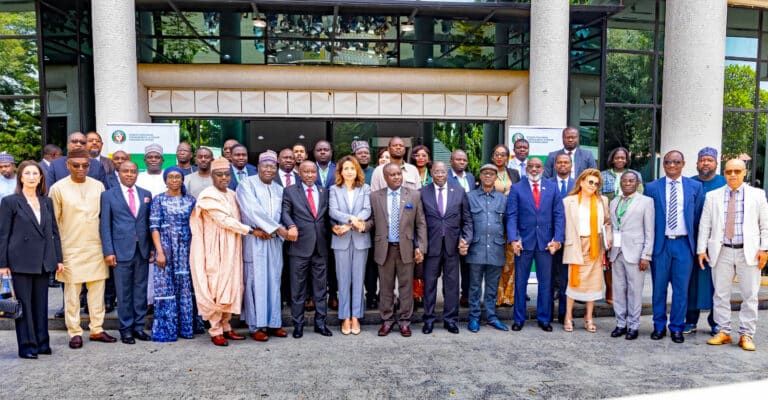
Najib Padar (Secretary of Embassy of India in Spain), Ashutosh Varshney, Director of the Center for South Asian Studies (University of Michigan), Christophe Jaffrelot, Director of Centre d’Etudes et de Recherches Internationales (París), Rajiv Kumar Director & Chief Executive of the Indian Council for Research on International Economic Relations (-ICRIER- New Delhi), Sundeep Walsekar, President of the Strategic Foresight Group (Mumbay) and Xenia Dormandy, Executive Director of the Belfer Center for Science and International Affairs (Hardvard University), talked hand in hand with Sanjay Peters and such interesting Spanish speakers as Pablo Bustelo (First Researcher for Asia-Pacífic of Real Instituto Elcano), Eva Borreguero (Director of Educative Programmes of Casa Asia) or Vicente Garrido (Director of INCIPE).
They all analysed the past, the present and the future of India as an Asian power bound to play an important role in the global international landscape.
Federico Ysart, Director of the Laboratory for the Analysis of Tendencies and member of the board of the Marcelino Botín Foundation (organizer of the forum) played the role of the ceremony master.
Emilio Lamo de Espinosa, catedrático of Sociology of the Universidad Complutense of Madrid, inaugurated this and Fernando Delage, Director of Casa Asia in Madrid,closed it: “It is a mistake leaving aside India at the time of deciding where to invest”, he stated.
During the meetings (they were three round tables) all of them talked about India as a plural country, full of contradictions, which offers many opportunities for investors and agile visionary entrepreneurs, despite its many problems and also despite that there is a long way to run for this nation.
Manufacturing and agrarian reform, key items to grow
Rajiv Kumar (ICRIER), who spoke about the macroeconomic field in the Forum, analyzed the main strengths and weaknesses of his country, starting with the economic growth momentum, which is living the most populated democracy of the world.
From an increase of GDP around a 4.4% between 1966 and 1990, the country has gradually moved to an increase of an 8%, according to OECD data. “We hope to achieve a 9.3 or 9.4%, and, given our potential for addressing new reforms, this growth rate can easily become a 10%”, assured Kumar.
Up today there has been an economic development based on the growth of the IT services sector (IT and mobile), but “between February and June of 2006 our manufacturing sector has started to grow more than the services sector.
Yet, we still suffer from a weakness in the agricultural sector. It is a sector requiring greater attention, since the 60% of the population lives in villages but cannot live on agriculture.
Improving agriculture diversifying and promoting its development are key points to achieving the goal of growth that we have marked “. Already during the colloquium, the president of ICRIER acknowledged that there is a serious problem at the time of confronting an agrarian reform: the smallholding. On the other hand, he also noted that India is at the head of the biotechnological research in Asia.
But it is true that while cities like Delhi, Bangalore or Bombay grow at a rate of 30%, it doesn´t happen the same in

the areas located between these urban centres. So that growth does not benefit the bulk of the population, but only some few people. It is not acceptable to keep these unequal situation, recognized the president of ICRIER.
Indian quality manufactures targeting the domestic market
Turning to the manufacturing sector, Kumar noted that India is not trying at all to compete against China in terms of massive manufacture. His country aims rather at a manufacturing with higher quality (e.g. components for cars, or cars like the manufactured by Tata Group, etc.).
In addition, the output would not be exported, but intended to supply an internal market that today exceeds 1,000 million souls, and that day by day counts with a more and more widespread middle class (in the coming years between 300 and 400 million Indians will be of middle class).
Pablo Bustelo, Senior Researcher for the Asia Pacific Region of the Spanish Royal Institute Elcano (RIE), stated his doubts about that India could develop its economy in an adecuate way, if its growth is only based on the IT services and on a manufacture only aimed at the domestic market.
Christophe Jaffrelot, Director of Centre d’Etudes et de Recherches Internationales (París), noted on this matter: “Peugeot has recently opened some factories in India, and their output capacities desn´t tell about to a production solely aimed at the Indian domestic market”.
Export without external dependence
Despite his approach towards the domestic market, Kumar acknowledged that the weight of India in the total value of global export market is very low (only 1%) and that this situation must be corrected.
Anyway, the president of ICRIER, keeps on considering the domestic market as a good option to develop the Indian economy without relying on the exports. The domestic market approach would make his country more independent than China.
A decreasing inflation rate, thanks to the government control policies and the relationship between public investment and growth of GDP are both, according to Kumar, among the indicators that speak for the stability and actual good performance of the Indian economy: “While China invests 50% of its GDP to obtain a 12% growth, India only invests a 36.6% to obtain a 8% “.
Currency appreciation, an actual problem
The external debt shows also a downward trend, as well as the level of public debt. “The Government has established that both the Central State Administration and the Regional Administrations, should not exceed the 3%debt rate in 2009”.
All these facts join to the growing integration into the global economy. A perfectly balanced BOP proofs it, assured Kumar. Yet the President of ICRIER showed his scepticism about the fact that his fellow citizens invest abroad: “The wealth generated by the Indian companies should benefit the country itself, creating wealth and employment within India”.

Bustelo (RIE)emphasized against Kumar that the integration of India in the world economy is limited by comparing this country with China. In fact the foreign investment in the latter nation was 5 times higher than the one carried out in India during 2006. As Bustelo said, in the 10 last years before 2006 the foreign investment in China was 10 times higher than in India.
While China takes the `creative accounting´ as an usual fact, India is a transparent country in that regard assured Kumar. That´s why there has been an excessive flow of extrnal capital investment, that have caused the Indian currency appreciate in excess (12%). “Thi s is a fact that could harm the country and the government should be able to control it”, he stated.
Entrepeneurial spirit, another advantage
“The Indian people have a great enterprising spirit.`Let the entrepreneurial geny out of the lamp´, this is the challenge today in India”, said Kumar, and he added: “The private sector must work together with the Government”.
It happens however, that the majority of entrepreneurs are small and medium entrepreneurs. Few businesses come to grow to become large companies. “This situation should change because we run the risk of increasing the duality between the few large companies that use the most advanced technologies and the many small and medium-sized companies working with very different technologies” said the president of ICRIER.
Another imbalance in the business environment comes from that in India there still a large percentage of informal economy and, therefore, of informal employment. The informal economy pays no taxes and slows the development of structured enterprises not to compete on equal footing with them within the market.
This situation discourages to foreigners, because they find it difficult to invest in India.
Ten tips for success in India
Despite all dificulties, Sanjay Peters (ESADE) assures:”there are many good reasons to invest in India: manufacturing to sell within the country, manufacturing there to sell in Asia, manufacturing there to sell in US…”.
Peters listed nine more good tips for those, who are thinking about making business in India: “Second, be flexible

with the business; third, you should seek a local partner, it is no good doing business alone; fourth, trust in the local management; fifth, account with longer implementation deadlines, at least 2 to 3 years for return on investment; sixth, you must work with medium term vision; seventh, learn of other investors, who already operate in India or in other similar countries like South Africa or China; eighth, hire external advisers, wo are really expert in the country, instead of a macro consultant as Mckenzie, more expensive but who will do the work worse; ninth, get to know the consumer (for example the factor price is important and the number of units that are acquired in each purchase is much lower than in Spain – avoid the packs of several units- and, tenth, believe me, the socio-political risk in India is smaller than in China, because India is a mature democracy”.
The Marcelino Botín Foundation will edite a book, in which the content of the Forum India 2007 will be included. The mentioned foundation is already preparing the next meetings. Federico Ysart announced also that in 2009 the forum will be devoted to Russia.
eastwind will publish on next issue a second part of this repport on the economical development in the oldest Asian democracy.
A shortcut of the whole report on eastwind newsletter 2007, 12nd-19th Nov.