A vote for the exit from the European Union on next 23rd June would cost britons high.

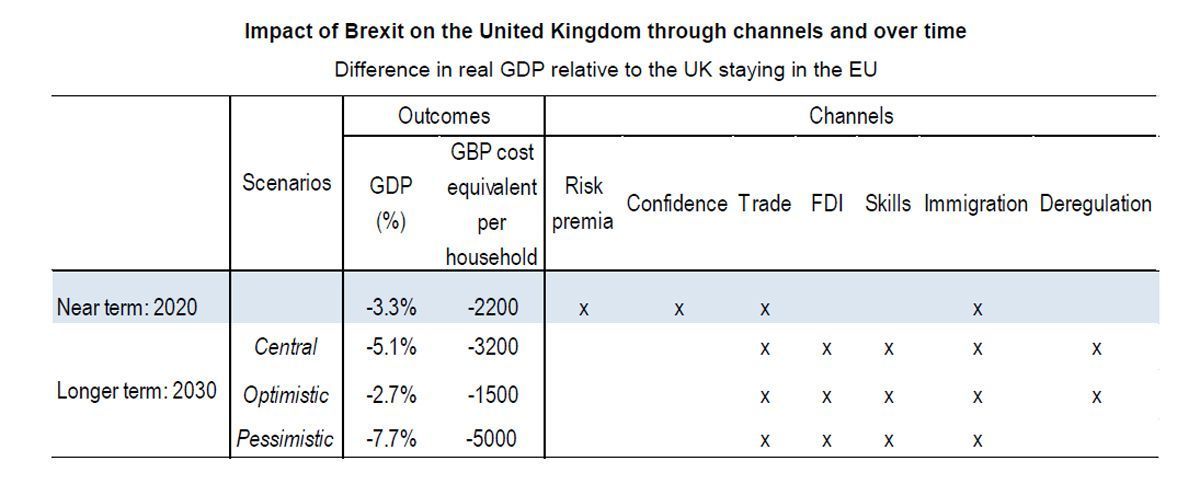
Following OECD study titled “The Economic Consequences of Brexit: A Taxing Decision” released latest 27th April, a decision by Britain to leave the European Union would cause a severe negative shock to the economy and weaken GDP growth for many years, equivalent to a cost per household of GBP 3200 per year by 2030 at today’s prices, and as much as GBP 5000 in the worst case scenario.
Presenting the analysis in a speech at the London School of Economics, OECD Secretary-General Angel Gurría said: “Leaving Europe would impose a Brexit tax on generations to come. Instead of funding public services, this tax would be a pure deadweight loss, with no economic benefit.”
The study projects longer-term effects of weaker technical progress, migration and capital caused by Brexit according to three scenarios: optimistic, central and pessimistic. In the optimistic projection the negative impact on GDP is around 2.7% by 2030, but in the pessimistic scenario it would be more than 7.5%. In the central scenario UK GDP would be more than 5% below what would be expected if the country remained in the EU. This GDP shortfall is equivalent to GBP 3200 per household.
Net transfers to the EU budget are relatively small, at 0.3% to 0.4% of GDP per annum in the years ahead, and the saving from a reduction in these transfers would be more than offset by the impact of slower GDP growth on the fiscal position. It is estimated that by 2019 the budget deficit would be higher by 0.9 percentage points of GDP.
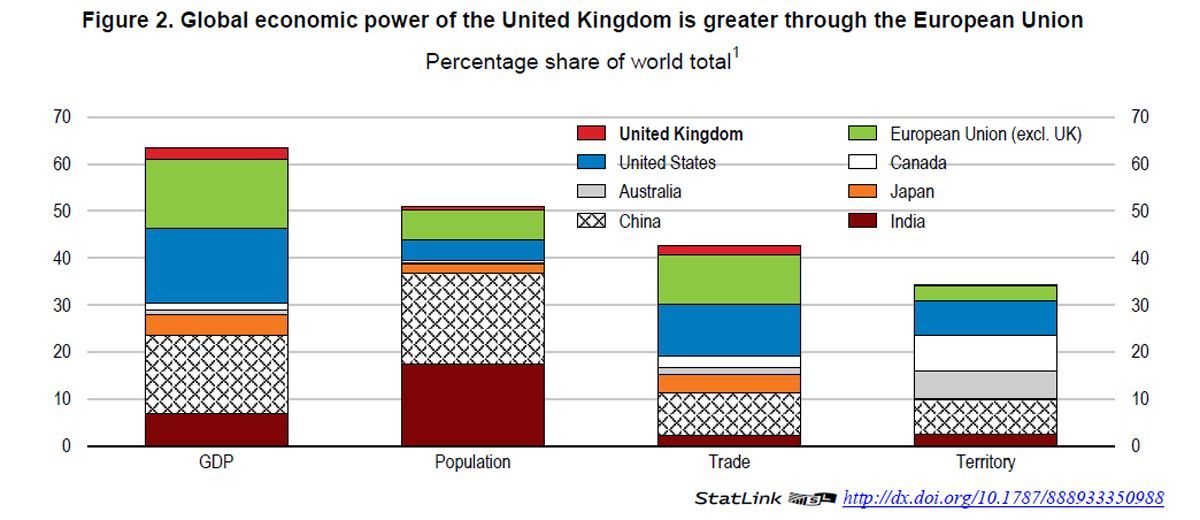
The UK would suffer from the loss of unrestricted access to the Single Market. It would also face new barriers in many of the third-country markets to which preferential access was lost as a result of leaving the EU, even if it succeeded in negotiating a new trade arrangement with Europe. An important risk is that capital inflows would be disrupted, leading to a shaking contraction of the UK’s record-high current account deficit of 7% of GDP.
“Brexit would mean that the UK would not only give up full and automatic access to the Single Market, but would also lose the benefit of trade agreements covering 53 markets that it currently enjoys and which it helped shape”…”Facing an embittered, freshly-rejected and much larger partner with an incentive to make exit costly, is not a good basis for a favourable outcome. Regarding non-EU trading partners, as President Obama reminded us last week, the UK on its own would not be exactly their top priority for negotiating trade deals or granting generous trade concessions. The rewards for potential partners would have considerably shrunk,” said on this point the Secretary general of the OECD.
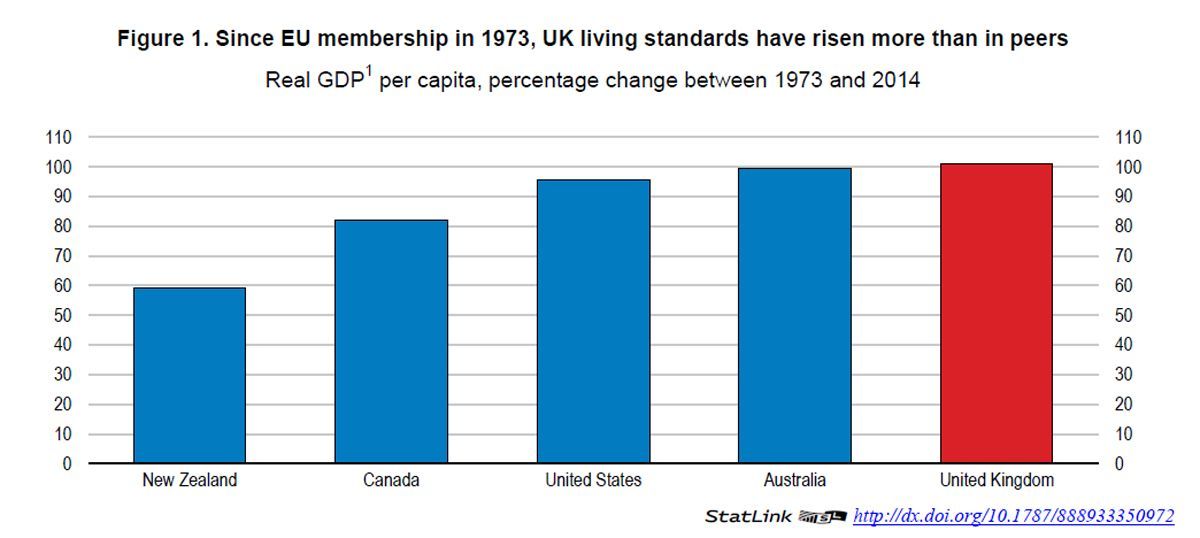
Being outside the EU would further damage trade, foreign direct investment and productivity, according to the study.
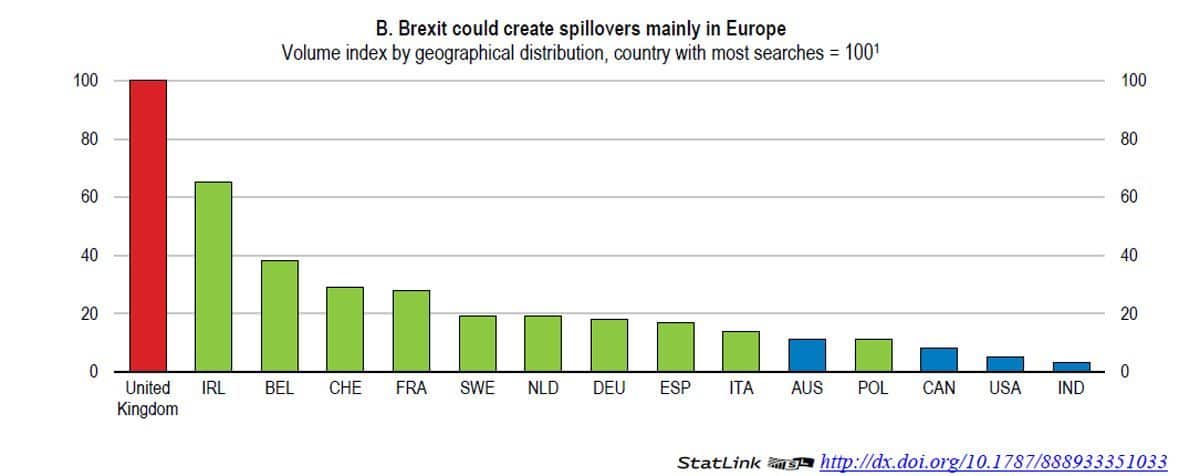
And also important, brexit will have a negative impact in other economies and global markets, specially inside the European Union.
“The question posed in the referendum, ‘Should the United Kingdom remain a member of the European Union or leave the European Union?’ is a taxing one. Taxing in the sense that its consequences are complex and permanent, not only for the UK but also for the rest of the EU and even beyond. So the responsibility borne by British voters on June 23rd is very serious indeed. It will be an act of intergenerational responsibility,” Gurría underscored.
Image over the headline.-UK Polling station. Image by secretlondon123, via Wikki Commons. To know more click here
Related external links:
“The Economic Consequences of Brexit: A Taxing Decision”
To Brexit or not to Brexit, a taxing decision (remarks by OECD Secretary General Angel Gurria)
Related Eastwind links: