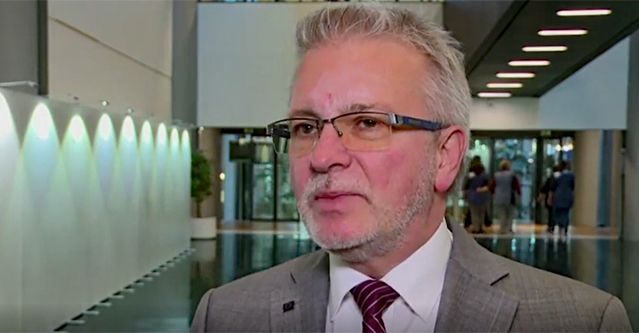
After the attack on the Ukrainian jetliner the EPP Group of the EU Parliament would consider pushing for the adoption of further sactions on Iran by the EU should the nuclear agreement is not respected by the Islamic Republic, explained today Michael Gahler, EPP Group Foreign Affairs spokesman.
“The general attitude after the people found out that there have been lies for three days about the real events regarding to the plane. Now increasingly the people return again to denounce the regime”…”given the circumstances on which the Ukrainian plane was shot down I think the regime has all reason to try and defuse the international community by returning to its application”…”If they continue to refuse (paying respect to the obligations derived from the nuclear deal) then we will after consider that (applying further sanctions to Iran)”.
For the EU High Representative for Foreighn Affairs, Josep Borrell, achieveing that Iran keeps complyant with the JCPOA is crucial in the current situation.
Cornelia Ernst (GUE/NGL, Germany), Chair of the Parliament’s delegation for relations with Iran, said: “We as the EU have to make clear to the US, that the murder of Soleimani was a breach of international law and the fuelling of conflicts in Middle East is a threat to world peace. We have to make clear to the Iranians that violence is the totally wrong way to deal with demonstrators. The EU can and has to play an important role as a moderator.”
The Joint Comprehensive Plan of Action (JCPOA) -best known as the nuclear deal- is an agreement to ensure Iran’s nuclear programme remains peaceful in exchange for lifting restrictive measures against the country. It was signed in July 2015 by Iran, France, Germany, the UK and the EU plus China, Russia and the US.
Implementation of the deal started on 16th January 2016 after the International Atomic Energy Agency confirmed that Iran had complied with its nuclear dismantlement commitments.
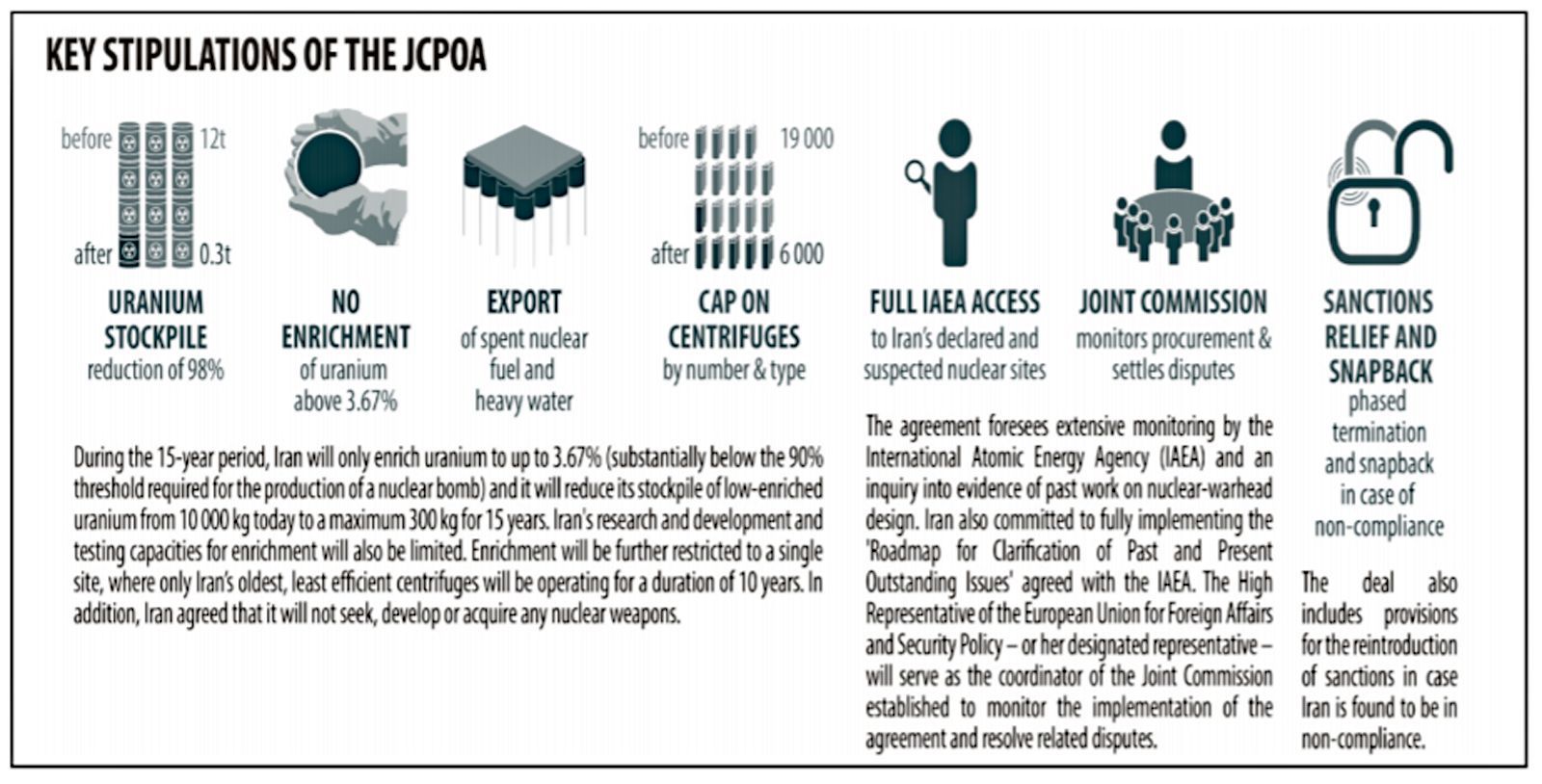
The USA withdrew from the nuclear deal signed by the US the EU and Iran on May 8th 2018 and the US Government announced today further sactioins against Iran.
Gahler added also in line with the position of Josep Borrell (EU High Representative for Foreighn Affairs) that US and EU forces need to stay in Iraq as, ” The fight against Isis needs to be continued. The Iraki army alone is not in the position to do it. I do not want to push the Iraqies further towards Iran. They should have international partners to help them establish a functional State and that’s what we are doing…”
The European People’s Party group (EPP Group) is a centre-right political group of the European Parliament consisting of deputies (MEPs) from the member parties of the European People’s Party (EPP). Currently leaded by Manfred Weber, it is is the biggest of the seven political groups in the current European Parliament comprising 182 of the total 751 MEP.
Gahler took part in the European Parliament´s debate on Middle East developments during its latest plenary session. He also urges international troops to stay in Iraq, despite the call by Iraq´s Parliament to pull them out. This follows the US killing using a drone of the Iraninan General Qassem Soleimani who was said to have ties to extremist militias waging attacks in the region.
Meanwhile EU Parliament continues to monitor the situation in Iran and the Middle East and regularly holds debates and adopts resolution to highlight specific issues. For example, last 19th December MEPs adopted a resolution denouncing the disproportionate use of force by Iranian security forces against non-violent protesters. Parliament has also pledged its support for the nuclear deal over the years and specially today.
An Ukrainian airplane shooted down, by mistake
The Ukrainian International Airlines flight PS752 was taken down shortly after it had off from Tehran airport on Wednesday 8th January, killing all 176 people on board, most of them Canadian and iranian citizens, but there were also several EU citizens inside the plane.
Iran denied during the following three days that its military forces had anything to do with the shoot down. The Governement suggested the Boeing 737-800 crashed down by a technical failure.
On 11th January the Iranian Governemnt recognised that thir military forces shooted down the plane by mistake. Following the announcement, Iranians protested on the streets.
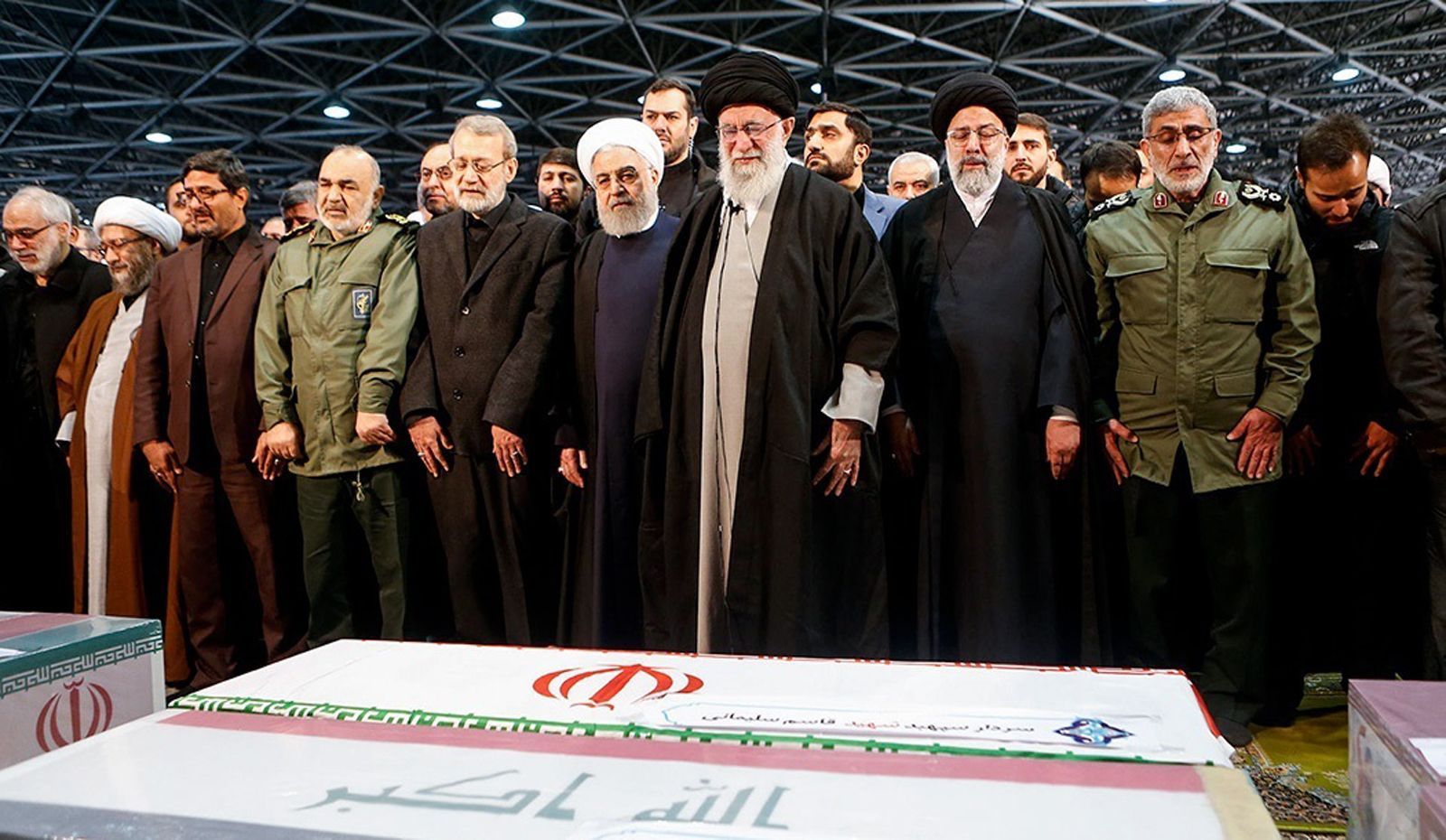
The shooting of the Ukrainian commercial flight came after Irani General Qassem Soleimani was killed on 4th January by a US drone while he was in Irak.
The US, not part of the nuclear agreement since 2028 and Iran announced its withdrawal in January 2020
A background document on the matter baked by European Parliament staff, explains how US President, Donald Trump has consistently opposed the nuclear deal and how the EU continued to defend the nuclear deal.
In January 2018 President Trump announced the US would stop implementing the agreement until its “disastrous flaws” could be addressed. Despite efforts by the EU to address his concerns, Trump announced in May 2018 that the US was withdrawing from the deal and would re-impose sanctions. These sanctions mean American firms are banned from doing business with Iran while foreign businesses that do so risk significant fines and being blocked from the US banking and financial system.
The EU continued to defend the nuclear deal, saying it was subject to strict nuclear inspection and that the International Atomic Energy Agency had confirmed several times that Iran was abiding by its commitments under the agreement. The EU tried to come up with measures to enable companies to continue doing business with Iran without being penalised by the US.
Iran initially kept on complying with the agreement, but gradually announced deviations from the original deal, such as breaking the limit on how much low-grade uranium it could keep, the background document underscores.
As tensions between Iran and the US got increased the Muslim Republic said last month that they were ready to enrich uranium to the level needed for military purposes in flagrant breach of the JCPOA.

Tensions flared after the US announced at the beginning of January that it had killed Iranian General Qassem Soleimani. Tne USA said that Soleimani was actively developing plans to attack American diplomats and service member in Iran and nearby countries.
Shortly after the drone strike, Iran announced it was withdrawing from the JCPOA deal and attacked two US military bases in Iraq with missile attacks in retaliation.
The situation further escalated after Iran said on 11th January 2020 that it had accidentally shot down the Ukraine International Airlines flight mentioned above.
The EU has tried to save the JCPOA even after US withdrawal
The EU expressed its deep regret at the US announcement to withdraw from the JCPOA, which had
been unanimously endorsed by UN Security Council Resolution 2231. Describing the JCPOA as a key
element of the global nuclear non-proliferation architecture and crucial for the security of the
region, the EU has vowed to ‘preserve the nuclear deal’. The leaders of France, Germany and the
United Kingdom issued a jointstatement on 8 May 2018 emphasising their continuing commitment
to the JCPOA. In a joint statement published on 5 May 2018, the Russian Federation and the People’s
Republic of China likewise expressed their ‘unwavering support for the comprehensive and effective
implementation of the JCPOA’.
Since January 2018, the E3 – France, Germany and the UK – had been exploring with the US whether
a compromise consistent with the JCPOA on the ‘shortcomings’ of the JCPOA outlined by President
Trump was possible. By early May, the two sides had reportedly reached a consensus on 90 per cent
of the text of what has been referred to as a supplemental agreement.
The E3 agreed to impose restrictions on Iran’s ballistic missile programme and to address Iran’s activities in the Middle East, two of the three demands that Mr Trump made in January. However, consensus could not be reached on the sunset clauses and the US requirement that the restrictions on Iran’s nuclear fuel production be extended indefinitely.
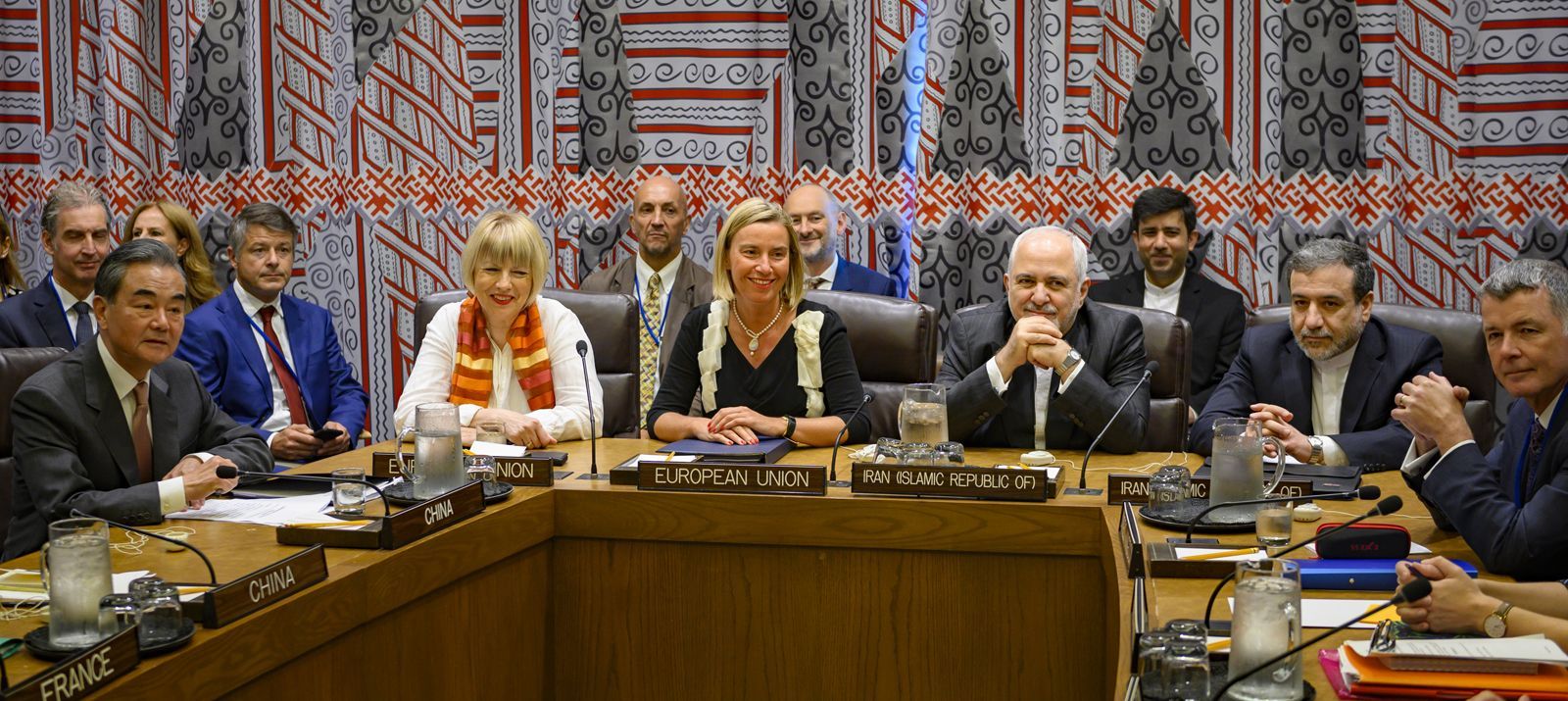
The leaders of the E3 noted in the joint statement they issued on 8 May that all the above issues needed to be addressed in the future, including Iran’s ballistic missiles programme, its ‘destabilising regional activities’ and a long-term framework for Iran’s nuclear programme after 2025.
With the Ukrainian plane shooted down probably in mind, Josep Borrell said at the EU Parliament today: I personally see a defuse on the tensions”…, and he added: “Honorable emembers of Parliament in the current situation of tension it is more important than ever to keep hold of the instruments that are serving to promote security and in this context the JCPOA remains crucial for no proliferation purposes. A failure to preserve the deal will only add tension within the region. Imagine for a second which would be the situation today had Iran nuclear weapons. And they would have been able to obtain those without the JCPOA (you can find this statement in the video provided below from the minute 5:30 to the 7:26).
Not only peace, but € 21 Bn in EU exports and growing, at risk
Following the data provided in the EP background document on Iran, the lifting of nuclear-related sanctions under the JCPOA has had a positive impact on EU trade and economic relations with Iran. From its lowest point in 2013, EU trade with Iran reached a total of € 21 Bn in 2017.
The average annual growth rate in EU exports to Iran since 2013 is 18.7 %; in 2016-2017, the growth rate reached 31.5 %. Imports nearly doubled in the 2013 to 2017 period, with an 83.9 % increase in 2016-2017. Iran is the EU’s 30th largest trading partner, while the EU is Iran’s third largest trading partner. In February 2018 40 % of Iran’s oil exports went to EU Member States, including the UK, France, Italy, Spain, Greece and Hungary.
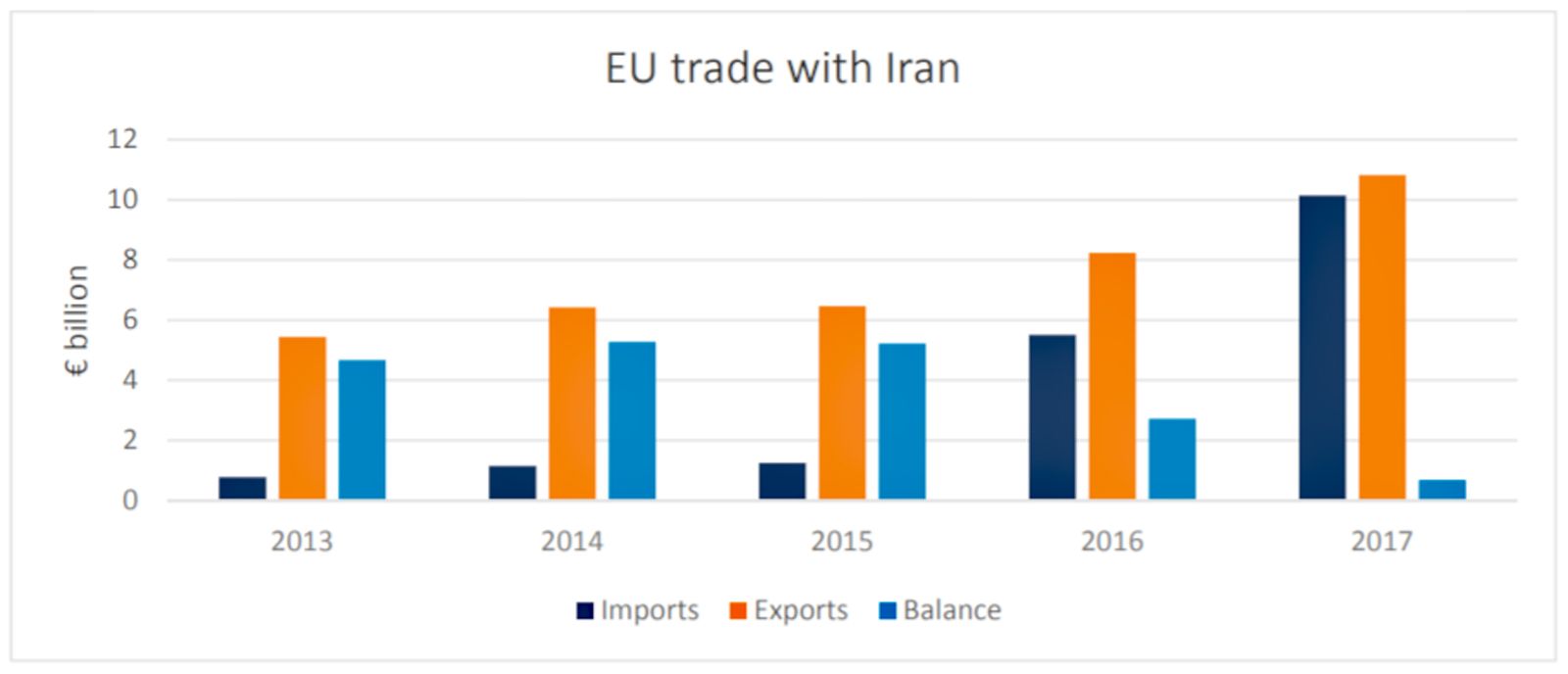
After the JCPOA was signed European companies have entered into important commercial and investment agreements with Iran, worth billions of euros. But following the re-imposition of US
sanctions, many of these deals are under threat.
Following President Trump’s announcement on 8 May 2018, all US sanctions lifted under the JCPOA were to be reinstated after a 90-day or 180-day wind- down period, and with full effect.
These sanctions include secondary sanctions with extraterritorial effect, which prohibit non-US companies active in the following commercial activitiesfrom engaging with Iranian counterparts. Primary sanctions, which prohibit US persons from engaging in almost an business dealings with individuals or entities in Iran, were never lifted under the JCPOA.
What Iran requires to keep the nuclear deal
The background document released by the EU Parliament explains that Iran’s supreme leader, Ayatollah Ali Khamenei strongly criticised the US for its unilateral withdrawal from the deal. He said that Iran would only continue to implement the agreement if the EU partners withstood US pressure and provided Iran with ‘practical guarantees’.
Iranian hopes hang from measures to protect EU firms from the effects of US sanctions, since the normalisation of trade and economic relations with Iran constitute essential parts of the agreement.
At the opposite end of the political spectrum, the commander of the Islamic Revolutionary Guard Corps, Mohammad Ali Jafari, congratulated the nation on the US withdrawal from the JCPOA, describing the agreement as ‘not credible even before the withdrawal’. Other senior clerics warned against relying on foreign powers and questioned the EU’s ability to save the JCPOA.
Any way Iran had set out several conditions for the country to remain in the deal, namely, an EU commitment to preserve the EU’s oil trade with Iran and take steps to guarantee that Iran can sell as much of its oil as it wants on the world market; to find practical ways to bypass the U.S financial system, by making direct euro- denominated payments for Iranian oil to Iran’s central bank; to compensate for the JCPOA’s ‘loss of value’ following the US’s withdrawal, by increasing EU investment in Iran; and to refrain from seeking new negotiations on Iran’s ballistic missile programme and its activities in the Middle East.
Recent announcements by European companies that they will not keep investing in Iran has been interpreted by Iran as ‘not consistent’ with the EU’s commitment to continued implementation of the JCPOA.
Meanwhile, hardliners in Iran always disliked the JCPOA, “perhaps” because the economic isolation of the pre-2015 sanctions-era brought benefits for their interests in the large semi-public economic sector. Iranians’ disappointment with the US withdrawal is expected to strengthen hard-line political elites.
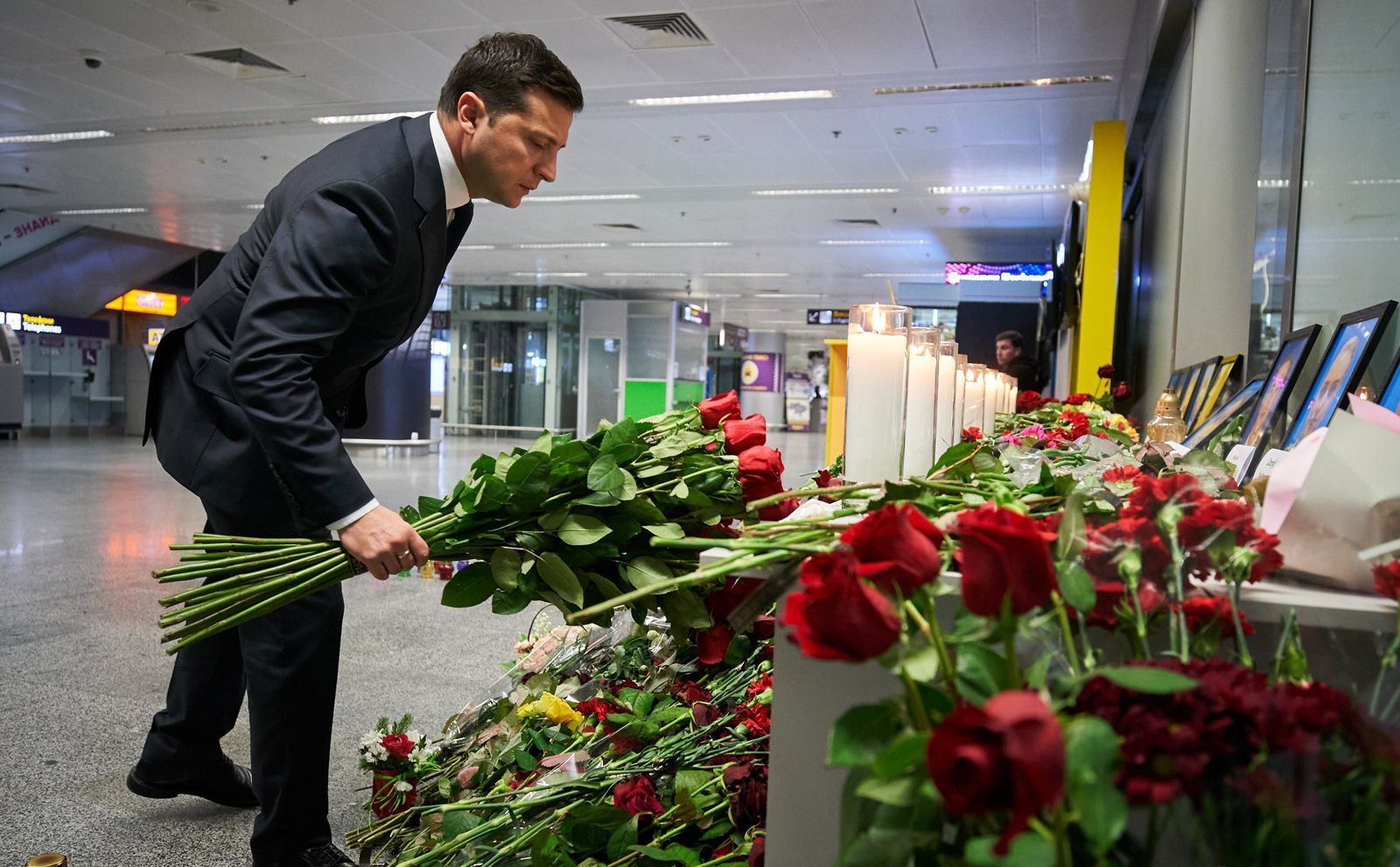
Image over the headline.- Memorial mourning for the victims of the Ukrainian plane shooted down last week at Tehran airport. caption from EPP Group video.© EPP Group at the EU Parliament.
Related Eastwind links:
EPP’s Michael Gahler on the Ukrainian plane crisis and possible EU sanctions against Iran (video)
The International Energy Agency, ready to act on the Strait of Hormuz situation, if needed
Iran agrees on IAEA’s control on its nuclear plan and on just civil purposes
Related external links:
The future of Iran’s Nuclear deal (EP staff baked background document)