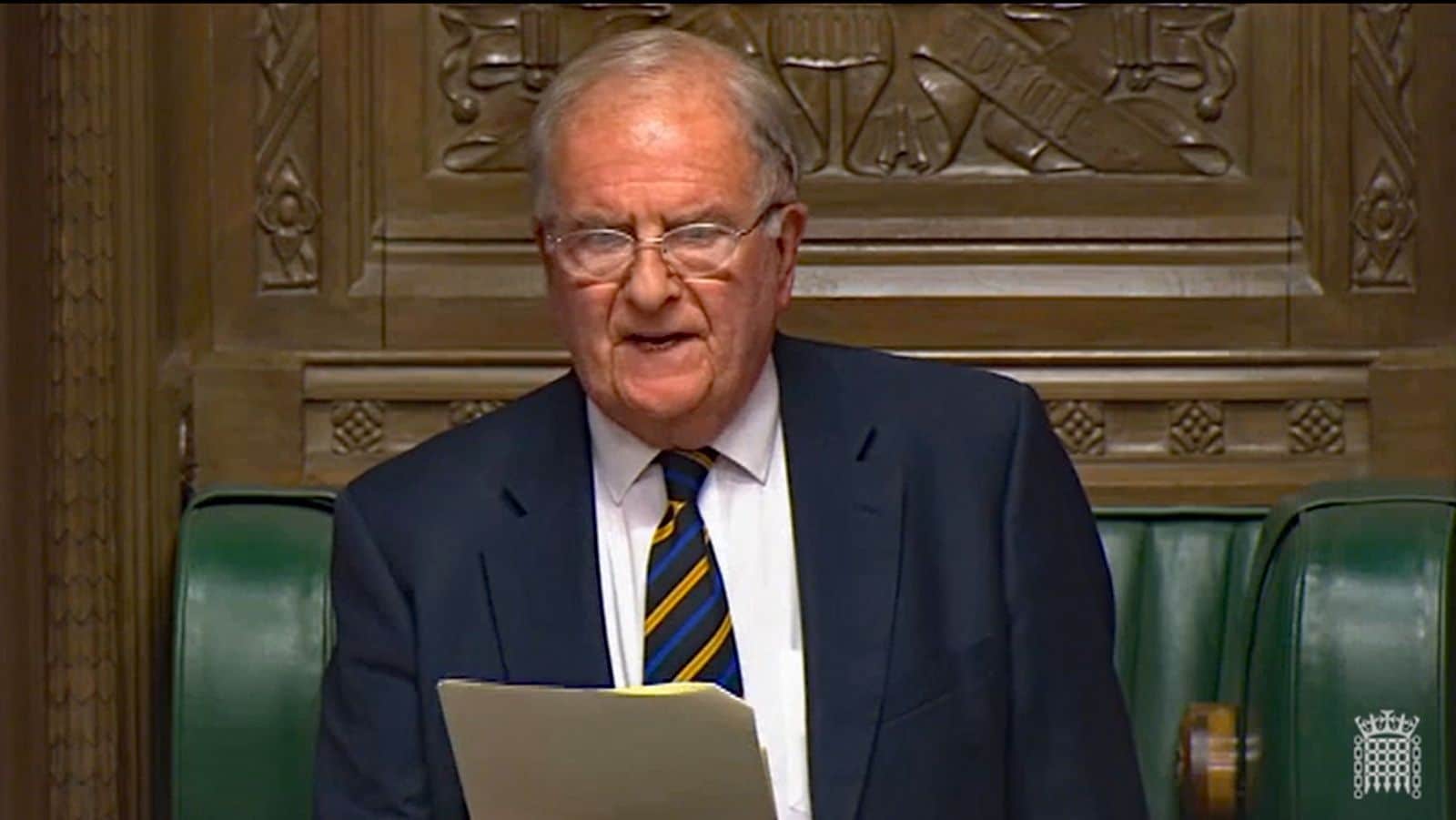
The Members of the UK House of Commons have approved today the Second Reading of the Withdrawal Agreement Bill (WAB) by 358 to 234 votes. The programme motion for the EU (Withdrawal Agreement) Bill was passed 353 to 243 votes. The Bill will proceed to a Committee of the whole House on Tuesday 6 and Wednesday 7 January, and Lords amendments and Third Reading on Thursday 8 January 2020.
The wide mayority obtained by Boris Johnson’s Conservatives has given the PM the needed support to pass the WAB with no ammendments.
The new seat distribution in the House of Commons after the 12th December General Elections gives johnson the chance to deliver on Brexit by 31st Jannuary 2020, but also the needed support in the Parliament to approve a WAB Bill that enables the cut on some of the rights UK workers had acquired under the EU Laws. It also has given Johnson the chance to pass a WAB Bill with some differences inside against that presented to the Parliament in October 2019. And these differences deserve some attention.
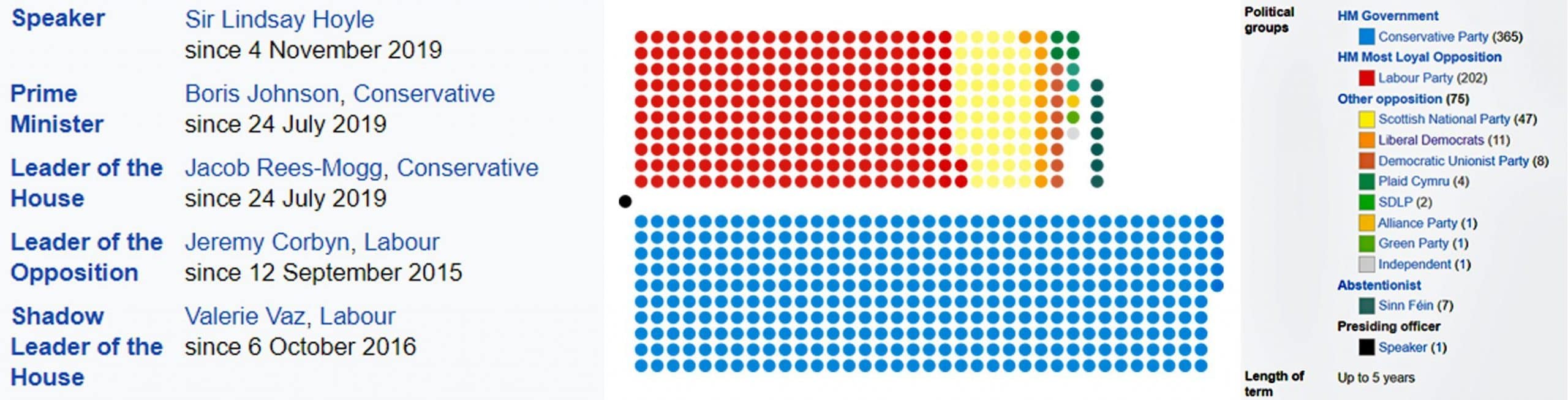
In fact, the Scottish National Party (SNP) do not like the changes at all, so does, Labor Party.
SNP Westminster Leader, Ian Blackford MP, spoke of his belief that the Bill compromised workers’ rights and environmental standards, stressing that it would place Scottish businesses at a disadvantage. He told MPs that the Scottish people had clearly signalled their desire for a second independent referendum in the 2019 General Election and asked what the Government had to “fear” by granting this.
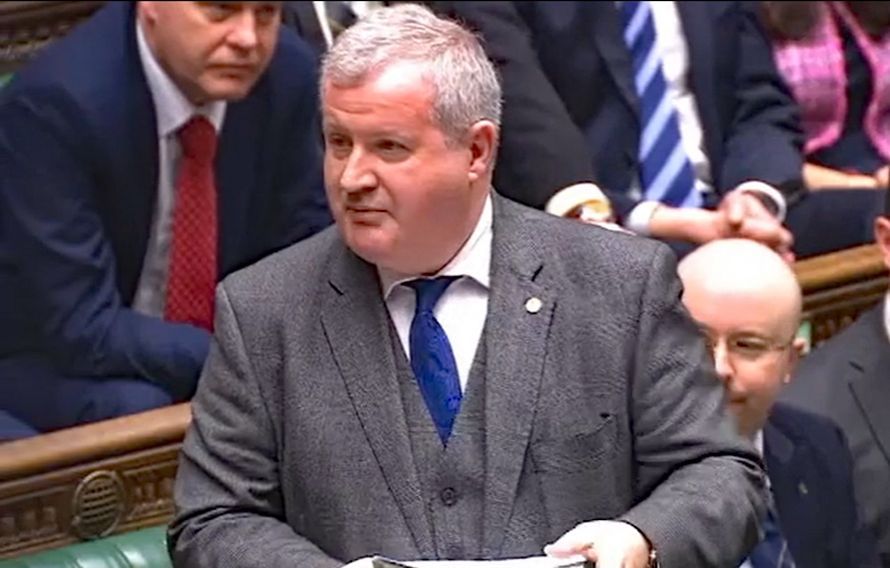
He stated that the Bill: “offers no guarantees on workers’ or environmental standards, or Mr Speaker, protection for the NHS from a future trade deal with the US. […] Scotland must consent to its own future. Westminster’s arrogance and ignorance has treated Scotland with contempt for too long.”
Jeremy Corbyn ( MP and leader of the Labour Party), stated that this was a “terrible deal”. He cited the removal of clauses that enhanced Parliamentary oversight and protected workers’ rights and unaccompanied child refugees. He highlighted the impact on Northern Ireland and the lack of provisions for environmental and food-safety standards.
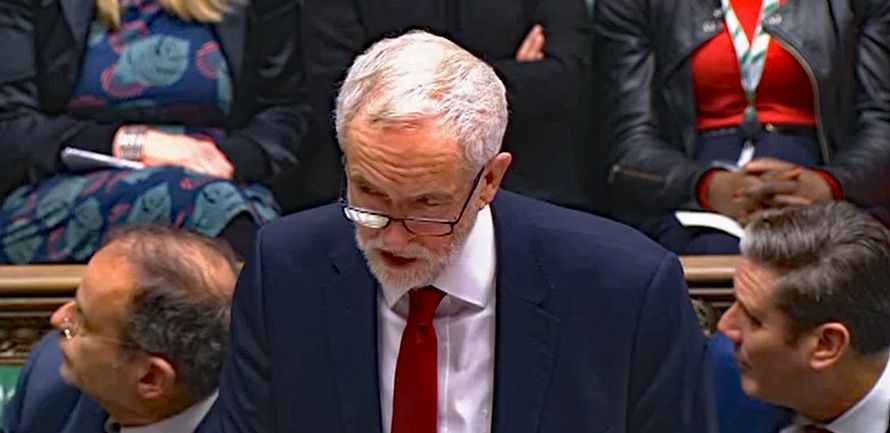
He told MPs that the Bill: “will not protect or strengthen our rights, or support our manufacturing industry or our vital trading relationships. (…) I see the Government’s removal of the protections in this bill for unaccompanied children seeking asylum as an absolute disgrace.”
Boris Johnson (PM of the UK) considers the withdrawal from the European Union as a “new national project” that will unite the nation. He underlined the Government’s commitment to keeping Northern Ireland in the UK, and stated that the benefit of leaving the EU is that the UK can set its own standards on subjects such as the environment.
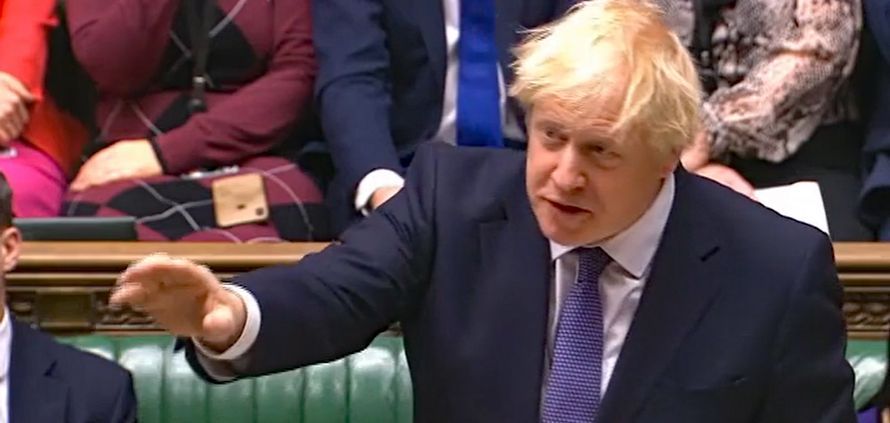
He said the Bill will: “reunite our country and allow the warmth and natural affection that we all share for our European neighbours to find renewed expression in (…) building a deep, special and democratically-accountable partnership with those nations.”
Fed up by the never ending Brexit process, Northen regions in th UK, traditionally supporting Labor Party massively voted Boris Johnson in latest elections, despite the fact that the new WAB includes no protection in the UK for the rights of workers achieved under the EU Law.
What has been removed from the WAB?
There sre three clauses and one Schedule that have been removed from the original October WAB:
1.- Giving MPs a veto over any Minister agreeing to an extension of the transition or implementation period in the Joint Committee (what was clause 30).
2.- Giving MPs a veto over the start of future relationship negotiations with the EU, an approval role in relation to the Government’s negotiating mandate, and an enhanced Parliamentary approval process for any future relationship treaty subsequently negotiated with the EU (what was clause 31).
3.- Providing additional procedural protections for workers’ rights that currently form part of EU law, but which would not be protected against modification, repeal or revocation in domestic law once the transition or implementation period has ended (what was clause 34 and Schedule 4).
Some additions
Five new clauses have been added to the WAB. These were not included in the Octobeer version:
1.- Reporting requirements to Parliament where the Joint Committee’s dispute procedures are used (new clause 30).
2.- Prohibiting any UK Minister from agreeing to an extension of the transition or implementation period in the Joint Committee (new clause 33).
3.- Prohibiting UK Ministers from using the written procedure to take decisions in the Joint Committee (new clause 35).
4.- The repeal of statutory provisions the Government maintains are now unnecessary or spent (new clause 36).
5.- Removing (via clause 37) the Government’s existing obligations (under section 17 of the EUWA) with regard to unaccompanied children seeking asylum in the EU who have family members in the UK. This would be replaced with a duty to make a policy statement to Parliament within 2 months of the Act passing.
At least four clauses modified
The December WAB has rectified at least four clauses of the October WAB:
1.- Clause 26 has a new subsection (1). This provision allows Ministers, by regulations, to specify the circumstances in which lower courts could depart from the rulings of the Court of Justice of the European Union (CJEU) after the transition or implementation period. Without this new provision, lower courts would have had to follow the UK Supreme Court’s rulings (and the High Court of Justiciary’s rulings in Scotland) on retained EU law, but otherwise would have to follow CJEU rulings unless and until the substance of domestic law changed or those higher courts had departed from the rulings of the CJEU.
2.- Clause 29 provided a role for the House of Commons’ European Scrutiny Committee in relation to developments in EU law of “vital national interest” to the UK during the transition or implementation period. However, the October WAB made no provision for the House of Lords in this regard. New subsections 3-4 in the December WAB give an equivalent role to the European Union Committee of the House of Lords.
3.- Clause 29 provided a role for the House of Commons’ European Scrutiny Committee in relation to developments in EU law of “vital national interest” to the UK during the transition or implementation period. However, the October WAB made no provision for the House of Lords in this regard. New subsections 3-4 in the December WAB give an equivalent role to the European Union Committee of the House of Lords.
4.- Paragraph 10 of Schedule 2 previously would have prohibited the Independent Monitoring Authority from delegating certain of its functions to a committee, member or employee. Two functions that were prohibited in the October version of the WAB, but which are not in the December version, concern decisions to carry out inquiries or to intervene in legal proceedings. New paragraph 39 would also make it possible to transfer the functions of the IMA to another public body by regulations.
Image over the headline.- The WAB Bill is passed at The House of Commons on 20th Dec. 2019. Vote results. Caption of the official video of the House of Commons.
Related Eastwind links: