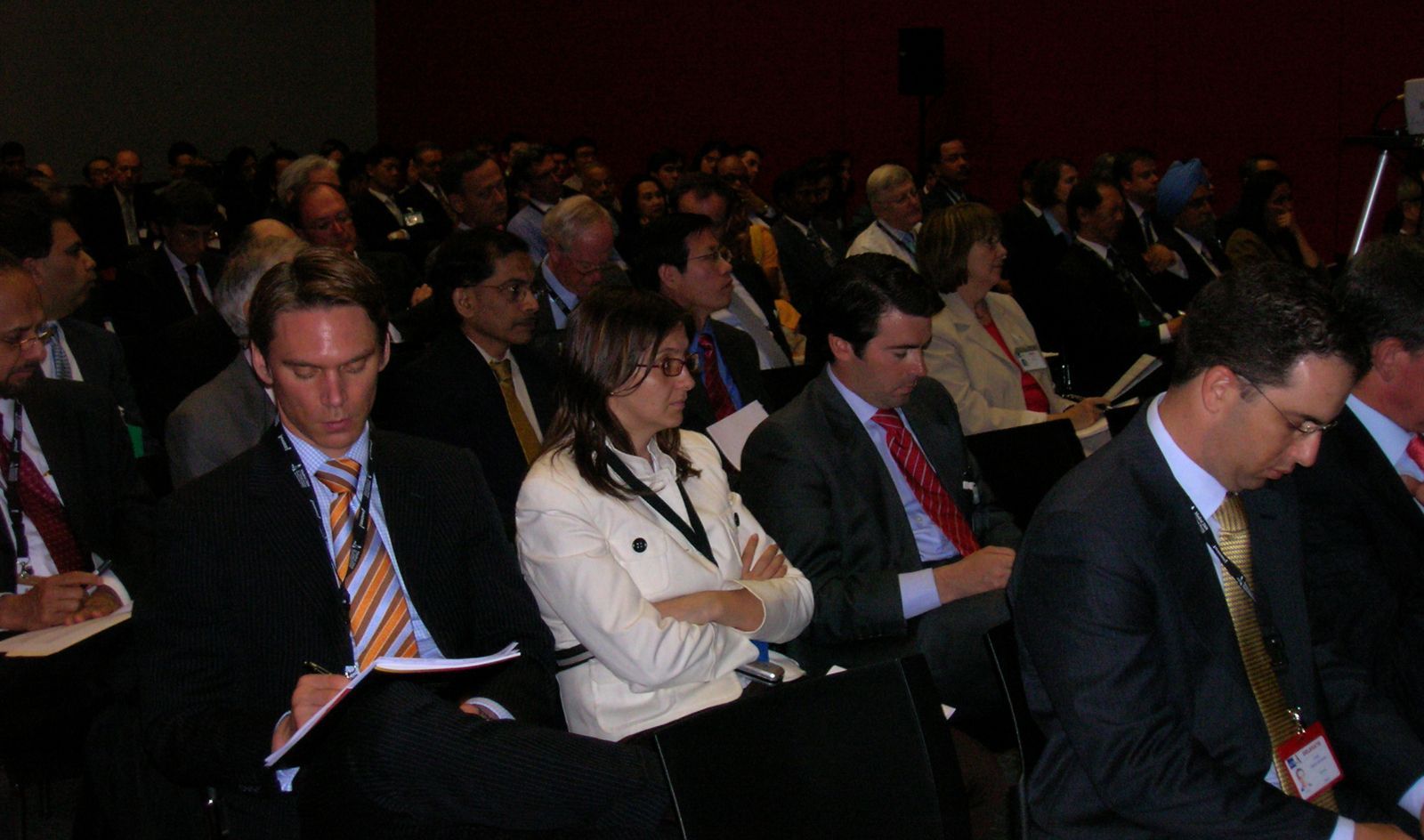
At least this was the strong statement by the former Director of the International Monetary Fund and currrent Senior Managing Director of Lazard, in the seminar titled Economic Integration and Financial Market Stability, offered during the 41st Assembly of the Council of Governors of the Asian Development Bank (ADB). Benhua Wei (Senior Advisor of the People’s Bank of China – The Central Bank of the PRC -), Hiroshi Watanabe (former Minister of Finance of Japan and Special Advisor to the President of the Japan Center for International Finance) and Klaus Regling (Director General of the Directorate-General of Economic and Financial Affairs of the European Commission) were also speakers at the seminar, and told as well about their opinion on financial and monetary integration in Asia.
In Rato’s view: “If monetary integration is a choice, financial integfration probably not, taking into account that it is necessary from the point of view of the financial efficiency in terms of allocation of resources and that, without financial efficiency, Asia will not be able to compete”.
Finally, the former President of the International Monetary Fund concluded: “…if investors go to another place seeking precisely that financial efficiency, Asia would lose ability to compete globally. That’s why I say that financial integration is a must”.
Stability and efficiency, major advantages of financial and monetary integration in Europe
Klaus Regling (European Commission) explained the developments, as well as the current system of monetary and financial integration implanted in the EU (Central Bank, Parliament, Commission, Council and euro currency). Regling referred to several benefits of the euro at the time of weathering better the financial turbulence stemming from the crisis in the USA.
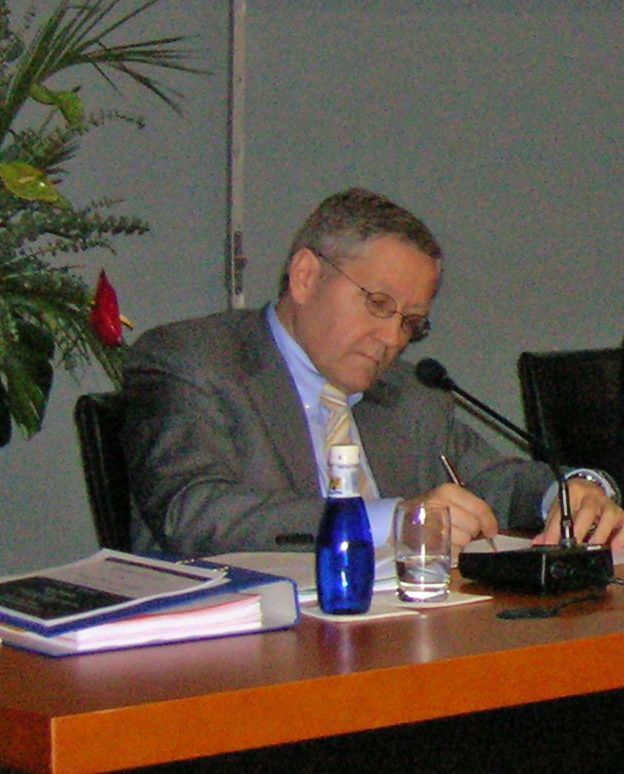
First “since we have the euro we are protected against the currency moves within the EU, which favors imports and exports within the members”. Secondly, the euro allows “a credible economic policy focussed on price stability”. In third place, due to the Central Bank it is by far easier to solve problems of liquidity. Fourth, the euro improves monetary stability.
Leaving aside the benefits relating to the liquidity, the euro has delivered to the European Union “the strongest performance in terms of efficiency, allocation of capital and resistance of member countries against financial shocks.
Finally, the euro makes it easier organizing a system of financial supervision, because it is based on institutions, which operate across borders”.
Semy dual currency systems and financial integration in the long term
Hiroshi Watanabe believes that Asia is still far away from the single currency, taking into account the different economic and labour situations within the region: “There are still two decades to go until we reach a common currency in Asia. We may have some kind of conversion in the form of a bag of currencies or so, but for the single currency is still a long way to go”.
The former Minister of Finance of Japan highlighted during his speech the advantages of having a regional currency pattern to alleviate the negative effects on stability, caused by the volatility of the foreign currency exchange market (Forex).
The new challenge at present is the adoption of a semi-dual currency system: “Today Thailand and Malaysia follow a dollar pattern to
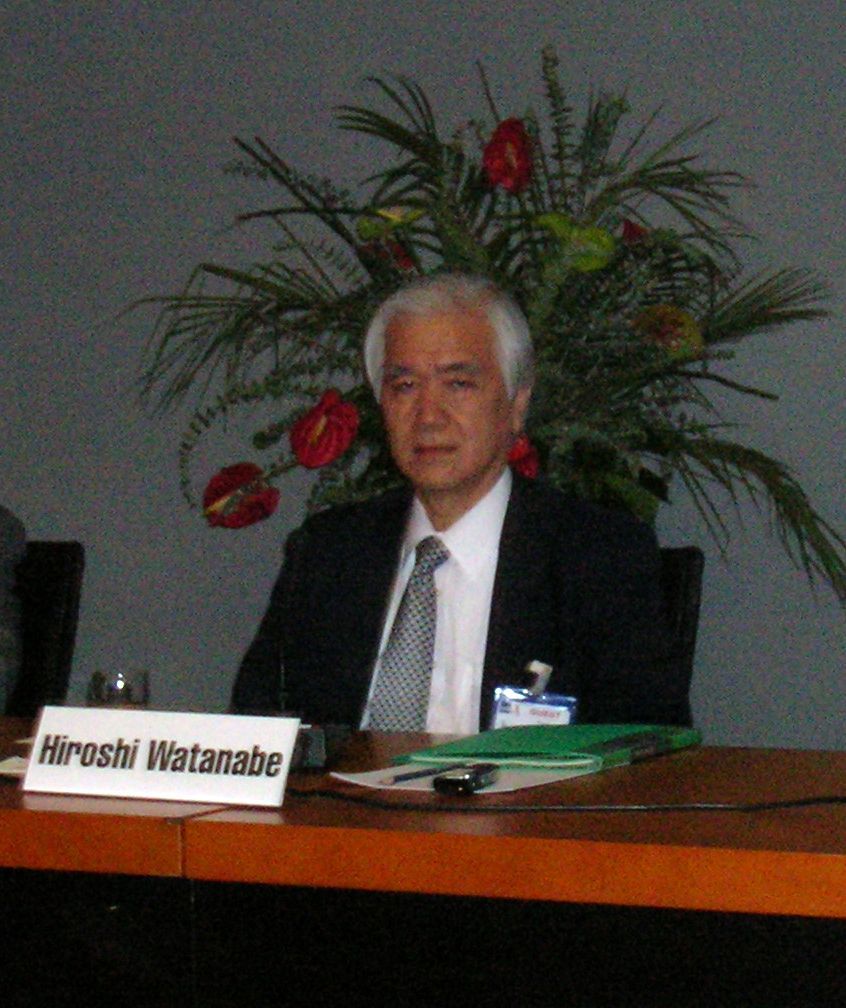
their international operations, so that the trade and the economy of both countries are affected by the dollar depreciation. Japan, for example, denominates more and more its imports and exports in euros… “.
Supervision systems to increase transparency
The second challenge facing Asia at the moment, in Watanabe’s view, is to establish control systems and adequate monitoring to increase transparency and security.
Benhua Wei agreed with the former Minister of Finance of Japan in this aspect related to the monetary integration: “It is soon to talk about a single currency. First, the European Union enjoyed before a political integration. In Asia we do not have this. Second, China and India in capital income terms are lower than other economies in the region.
Yet, we have done the work to promote the understanding between different economic structures in the Asian countries.
China still controls money transactions in our capital account. It would be desirable to have a single currency, but this is a long-term objective “.
Asia, better prepared to meet the financial turbulence
Due to the crisis in the West, the current situation leaves “less space for the monetary issues”, indicated Benhua Wei, and added “… The demand slow down in terms of trade will deteriorate the economic situation, negatively affecting exports and labour market. On the other hand, the upward pressure on prices of food and oil will increase to turn the pressures on domestic inflation.
Finally, the financial market turmoil has been amplified in East Asian countries, due to the over react to the US crisis”.
Despite the situation described, the Senior Advisor of the People’s Bank of China assured: “Asia is now better prepared to prevent the current turbulence in the financial market. Among other things because, after the Asian crisis of 1997, several proposals have been made to strengthen regional financial cooperation”.
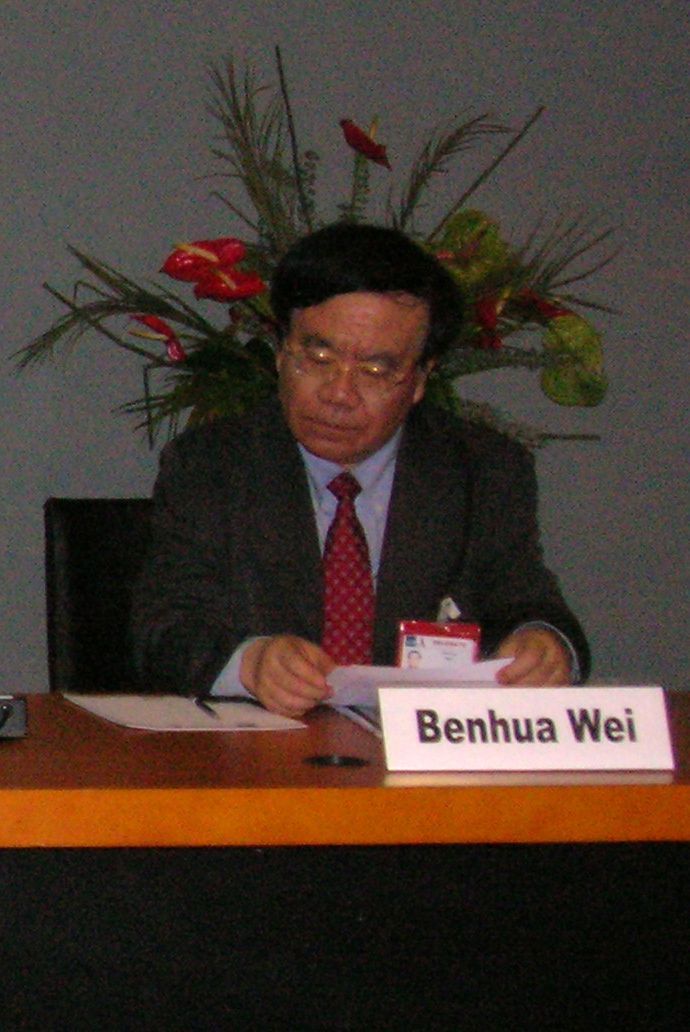
Since the lessons learnt from the financial crisis in 1997, the EMEAP (Executives Meeting of East Asia-Pacific Central Banks) has worked to develop deep and liquid domestic bond markets, capable of reducing the traditional dependence of the Asian companies from bank short term borrowing, when looking for funds. The idea is to ensure that the savings generated within Asia-Pacific are invested in companies in the region, instead of in companies and financial products in developed economies such as those of the countries members of the G3.
Part of the Asian savings invested in developed economies return to the region in the form of bank lending and portfolio inflows denominated in dollars, which are far more volatile than direct domestic investment. Hence the People’s Bank of China made a proposal to create a fund to invest in bonds of Asian firms (ABF1) denominated in dollars.
The ABF1, launched in 2003, invested in the markets of 8 countries (Continental China, Hong Kong, Indonesia, Korea, Malaysia, Philippines, Singapore and Thailand).
“Lessons learned”
After the success of ABF1, another fund, the ABF2, was launched in the year 2004. The new fund purchases Asian bonds denominated in local currencies. The ABF2 includes the PAIF (Pan Asia Bond Index Fund) and also 8 funds that invest each one in a national market within the region. Of course, it has been necessary a close financial cooperation among central banks and financial authorities of the EMEAP members to succeed. The Review EMEAP 2006 on ABF2 initiative (hereinafter RABF2 2006) quoted among the “lessons learned”, the useful role of central banks at the time of spearheading and coordinating the regulatory reforms. It also referred to the importance of public-private partnerships for market development, especially when creating new products. Market reality and regional diversity demands flexibility from central banks in promoting the development of the market, this is another “lesson learned”. Finally, the RABF 2006 concludes that transparency is essential at the time of encouraging investors, intermediaries and regulators.
Bilateral agreements, the EMEAP and ASEAN, for financial cooperation
Wei referred to ASEAN+3 (Association of Southeast Asian Countries + Japan, China and Korea) together with the EMEAP (Executives Meeting of East Asia-Pacific Central Banks) as the two major platforms for financial cooperation within the region.
The EMEAP members are central banks and financial authorities from the following countries: Continental China, Korea, Japan, Thailand, Hong Kong, Philippines, Malaysia, Singapore, Indonesia, Australia and New Zealand.
The Chinese speaker also told about some bilateral agreements, as the Bsa (Bilateral swap arrangements) within the EMEAP (Chinag Mai Initiative), together with the ABF1 and ABF2 (Asian Bond Fund), signed in the framework of EMEAP.
Among the measures to develop in future the bond markets in Asia-Pacific, the RABF2 2006 quoted: The aplication of international standards in a regional context, the promotion of mutual recognition of financial products and intermediaries within the EMEAP economies, reduction or removal of both the withholding tax and the capital gains tax, as well as raising transparency of Asian bond markets.
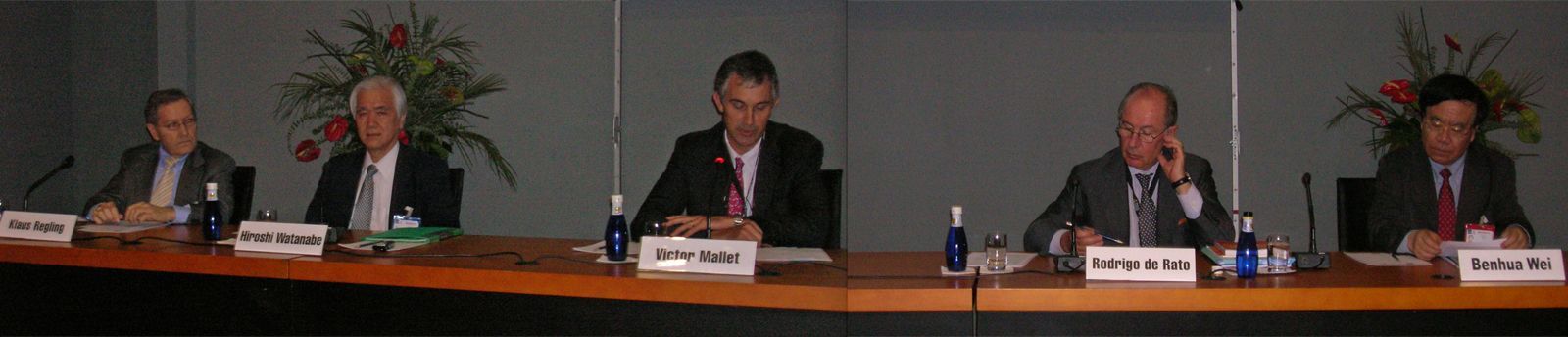
The members of the former European Economic Community had a Central Bank and other common political institutions like the Commission, the Council or the European Parliament, at the time of considering a financial integration and a common monetary policy. Asia doesn’t enjoy the cohesion achieved in Europe. This lack of cohesion in Asia, makes the financial coordination come primarily by the hand of bilateral agreements as those quoted above.
Despite the advances achieved so far, Wen Hua Wei admited: “Further efforts need to be made to achieve the potential benefits of financial cooperation”.
Image over the headline.- Rodrigo Rato (former Managing Director of the International Monetary Fund and now Senior Managing Director at Lazard) at the 41st ADB Annual Meeting. © Eastwind.
Related Eastwind links (old platform):
Our readers can access several information related to this item, published both on the eastwind web and on the eastwind newsletter.
See first, the report titled “The Asian Development Bank bet on the private sector to promote economic development and poverty eradication” a report on the 41st Annual Meeting Board of Governors of the Asian Development Bank, published on the Eastwind events section
It is also related to banking development in China the report titled “Saving boxes for China?“, published on the eastwind newsletter 2008, 12th-18th May
Once all the editorial contents are migrated to our current platform an the links provided here do not function any more, our readers will find the mentioned contents just using the search case located above to the right of Eastwind magazine’s social channel icons (https://eastwind.es/en/)