Facebook has announced many advances for advertisers in Facebook. Among them although not presented as one of hem, the company has launched the first mainstream AR platform.
The launch of the new AR platform along with the social turn in its VR approach, with products like Facebook Spaces and VR Rooms were unveiled at the F8 conferece for developers held on 18th and 19th April in San José (Cal. USA).

Mark Zuckerberg (founder and CEO of Facebook) pointed during his keynote that AR and VR go hand in hand, but he was not the only one at F8.
Michael Abrash (Chief Scientist, Oculus Research) underscored the potential of the so called mixed reality (being able to capture and render real obects and putting them into the VR experience) specially for advertising.
This technologies will actually change the ad experience for consumers, he said.
Another key point in Zuckerberg’s speech was on the fact that Facebook has changed its focus, from connecting friends and families to building communities. A change which is related, he said, to the latest developments by the tech multinational also on AR and social VR.
Camera Effects, just the first step towards a wider AR platform
Last month Facebook introduced the Facebook camera to make photo and video sharing even more expressive with fun masks, frames, interactive filters, and fresh art from featured guests. Today the launch of the Camera Effects Platform brings the chance for anyone, specially developers, to create augmented reality (AR) effects and elements for users to choose and apply on the photos and videos they share.

The Camera Effects Platform turns smartphone cameras into the first augmented reality (AR) platform, said Mark Zuckerberg (Founder, President and CEO of Facebook). It providing an opportunity for artists and developers to create effects for the Facebook camera.
Included with this new platform are two creative tools, Frame Studio and AR Studio, which give the Facebook community the power to create a full spectrum of camera effects, from simple frames to interactive AR experiences. This platform empowers artists and developers to connect art with data to bring AR into everyday life through the Facebook camera.
Nike, Real Madrid, Manchester United and some other brands have already launched experiences using these tools.

Facebook has already partnered with brands to create masks for Faceboook Camera related to upcoming movies like Alien: Covenant, Despicable Me 3, Guardians of the Galaxy Vol. 2, Power Rangers, Smurfs: The Lost Village and Wonder Woman.
Adding to the basic effects, such as masks, Mark Zuckerberg (Founder, CEO and President of Facebook) unveiled other blocks for AR developments, such as: Precise Location (simultanious location and mapping -SLAM- allows placing AR texts and objects in the right place integrating them in the photo or video scene as they were actually there), 3D effects (allowing capture and interact with scenes in 3D with high precision) and Object Recognition (AI tool that provides AR effects and elements that make sense with the real object appearing in the photo or video).
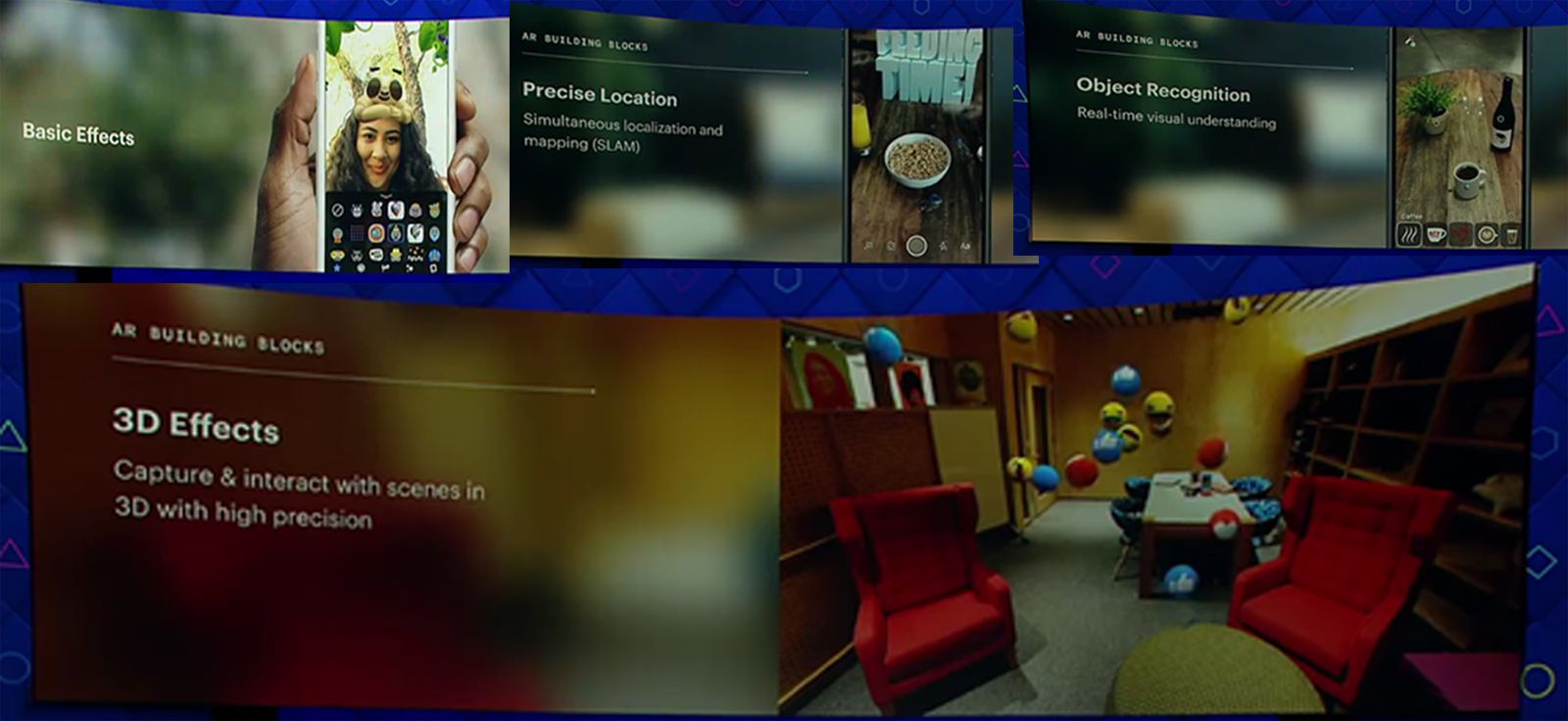
Zuckerberg referred also to AR tools for games that will be available, he advanced, later this same year.
Deb Liu (VP of Platform & Marketplace at Facebook) provided some deeper information on the AR platform (Frame Studio and AR Studio). She also advanced that the platform will allow sticking Gif images on Facebook live videos and showed some examples on how AR effects can make life not only more fun but also provide a whole interactive AR experience for users, brands and consumers eg. inside a coffee shop.
Strong bet on social VR
Facebook launched on 18th April its first social VR product, Facebook Places (still under beta version) and has already started to ship Oculus Rooms at the end of 2016. Now Oculus Rooms has already shipped its 3rd enhanced version.
Mark Zuckerberg referred on his keynote to Oculus Rooms and the social approach to VR Facebook has taken.
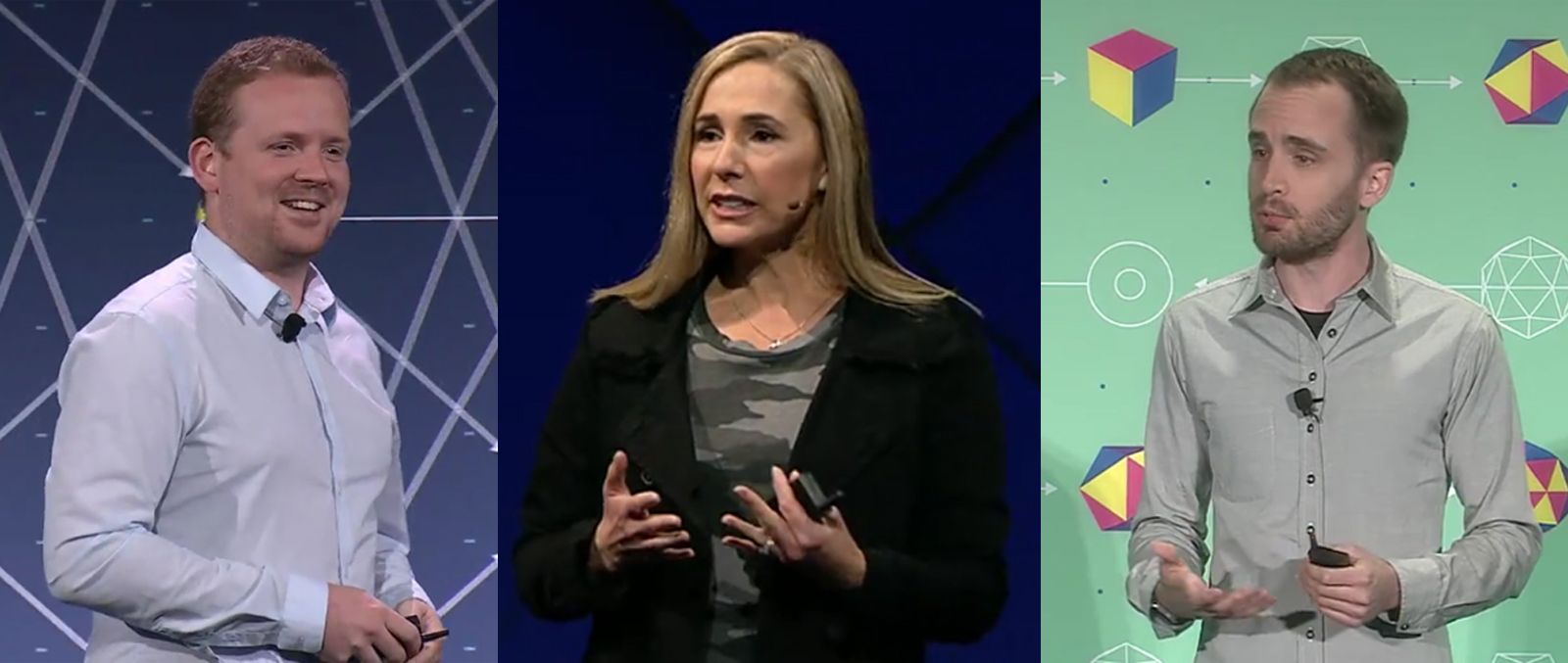
Rachel Franklin (Head of Social VR) unveiled the beta launch of Facebook Places and there were at least three speakers more telling about social VR developments: Mike Howard (Product Manager Facebook VR Social Platform), Mike Lebeau (Product Manager, Oculus) and Mike Booth (Product Manager, Facebook). They explained respectively how to add social components to the VR apps, the lessons learnt from Oculus Rooms and the making of Facebook Places.
Why social VR?. “This is the first opportunity to have people with you in an experience that in a way that you really feel like they are right there. This sensation that we call CO PRESENCE derived from putting you into the virtual reality space together with other people in that compelling way can create lasting memories and experiences for the users of your VR apps”, said Mike Howard (Product Manager Facebook VR Social Platform).
Howard provides some data from an experiment carried out by his team where the behavior of a group of users of Dragon Phone (one of the most popular VR mobile games) was observed for a week long period. People who played only single player, they spent on average 13 minutes playing Dragon Phone that week. People who played at least one game which involved being connected to another person spent on average 205 minutes and they spent 16 times a week.
We also looked at how many times did people playing multiplayer came back to play ant it was three tiems higher than those in the single player mode, he said.
Mike Lebeau (Product Manager, Oculus) provided as well some data on this point from the Oculus Rooms experience. Social VR is engaging, he underscored, people spend five times more time in rooms when provided social interactions and they are twice more likely to return in the case of social VR Rooms.
Other data comming from the Oculus Rooms experience is that 48% of users connected in Rooms with family members, and another 36% connected with close friends. A 46% of Rooms users lived a VR experience together with others, instead of alone or half alone, he added.
Lebeu agreed that one thing that makes social VR engaging and great is the sense of CO PRESENCE but pointed that there is another point, as much engaging than the feeling of CO PRESENCE. This element is being able to manipulate the same objects present in the VR experience together.
Social VR, far beyond multiplayer games
But the social VR experience is not something just related to the moment people is together at the VR space. It involves in Facebook’s view a whole journey from discovering the experience one wants to get into, choosing and contacting with the people for sharing the experience and then communicating what one has lived or is living to friends, even outside the VR space (eg. by streaming). The team working in the Oculus Social Platform is building tools and products for developers in all the steps and points that make up the whole social VR experience.

Mike Lebeau (Product Manager, Oculus) explained that social VR is to do with quality time spent together with family, friends or other people in general.
He said that Oculus works in both people centric VR experiences -usually meant to share with family and friends- and activity centric (usually shared with friends or extrangers).
Lebeau also pointed that another lesson learnt from Oculus Rooms is that social VR was not only for people making contact in the distance, but also for people sitting close together.
Events, Rooms, Avatars and interesting contents for the TV set inide Oculus Room
Events is an API that offers developers tools and a platform to announce VR experiences for the users tthat might be interested in taking part in them. Eveents also offers tools to promote the event outside the VR space. Events will be sooon available for developers whoare using the mobile app.
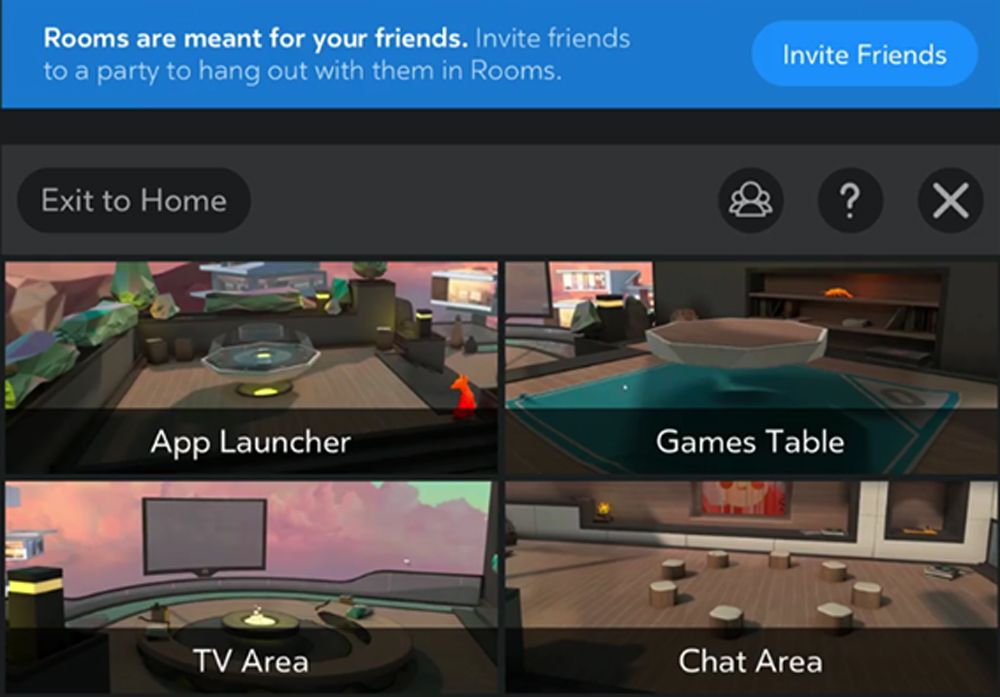
Rooms is the VR place to contact with fellow players and interact with them before the VR event or experience begins. There are also VR experiences and activities designed to be lived insithe the Oculus Room.

The Rooms API provides developers with several tools to create a tailored Rooms for their VR events, games, experiences, as well as define and manage the multiplayer mode for thei VR events or experiences they are featuring.
The Avatar tool is the one that allows users create their identity in the VR world. One of the lessons learnt from Oculus Rooms, said Lebeau, is that “overwehlmingly people are using avatars that look like themselves”.
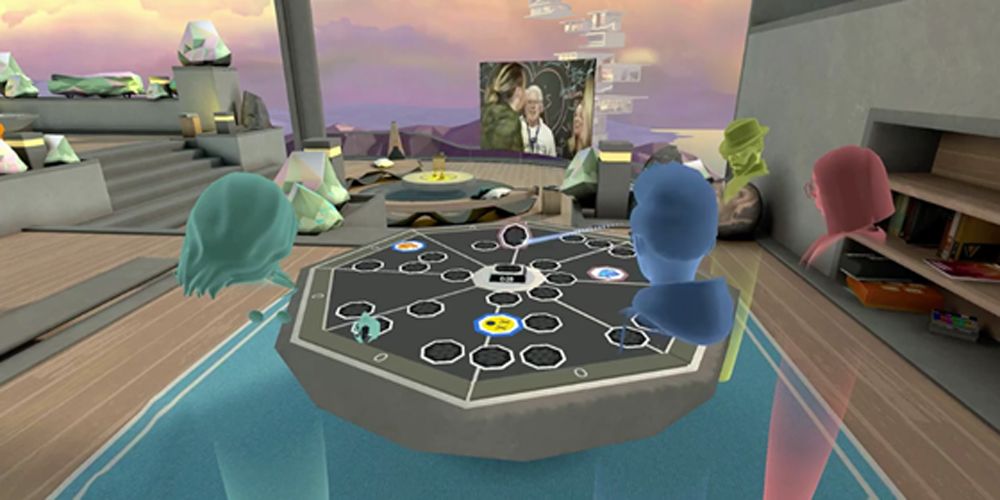
The last but not the least important lesson learned from the Oculus Rooms experience is that TV itself and TV content is important even if this is “broadcasted” through a VR set. Many users like watching what it appears on the TV while playing or just sharing at the Rooms, said Mike Lebeau.
TV has a lot more potential than we thought at first, because after enhancing the contents available on this virtual screen at Oculus Rooms, people started to spend 46% more time at TV than in the previous version, he added.
Image over the headline.- Mark Zuckerberg (Founder and CEO of Facebook) at the F8. ©
Related external links:
Keynote 19th April (video)
Among the speakers: Mark Zuckerberg (Founder, President and CEO, Facebook), Deb Liu (VP of Platform & Marketplace, Facebook) and Rachel Franklin (Head of Social VR)
Keynote 20th April (video)
Among the speakers: Michael Abrash (Chief Scientist, Oculus Research)
VR Together: Adding Social Components to Your VR Apps (video)
Speaker: Mike Howard (Product Manager Facebook VR Social Platform)
Lessons learned on social VR from Oculus Rooms (video)
Speaker: Mike Lebeau (Product Manager, Oculus)
The making of the first Facebook social VR product: Facebook Spaces (video)
Speaker: Mike Booth (Product Manager, Facebook)

More on Social VR Oculus tools click here
Related Eastwind links:
Snapchat World Lenses, now in 3D augmented reality