A widely accessible and open Internet of Things (IoT) platform based upon new Samsung SmarThings Cloud, Project Ambience chip and the voice assistant Bixby 2.0, as well as a partnership with Google to lead AR enabled smartphones aimed to bring AR to everyday life. Those are some of the advances for the new connected life vision unveiled by Samsung at the Samsung Developer Conference, currently being held at The Moscone West in San Francisco (USA) from 18th to 19th October.
“At Samsung, we’re constantly innovating to deliver smarter, connected experiences for our consumers. Now we’re taking a big step forward with our open IoT platform, intelligent ecosystem and AR capabilities,” said DJ Koh ( President of Mobile Communications Business, Samsung Electronics). “Through an extensive open collaboration with our business partners and developers, we are unlocking a gateway to an expanded ecosystem of interconnected and intelligent services that will simplify and enrich everyday life for our consumers.”
Democratizing the Internet of Things
Samsung is combining its existing IoT services (SmartThings, Samsung Connect, and ARTIK) into one IoT platform called SmartThings Cloud.
The Smarthings Cloud will provide a single, powerful cloud-based hub that can seamlessly connect and control IoT-enabled products and services from a unified touchpoint.
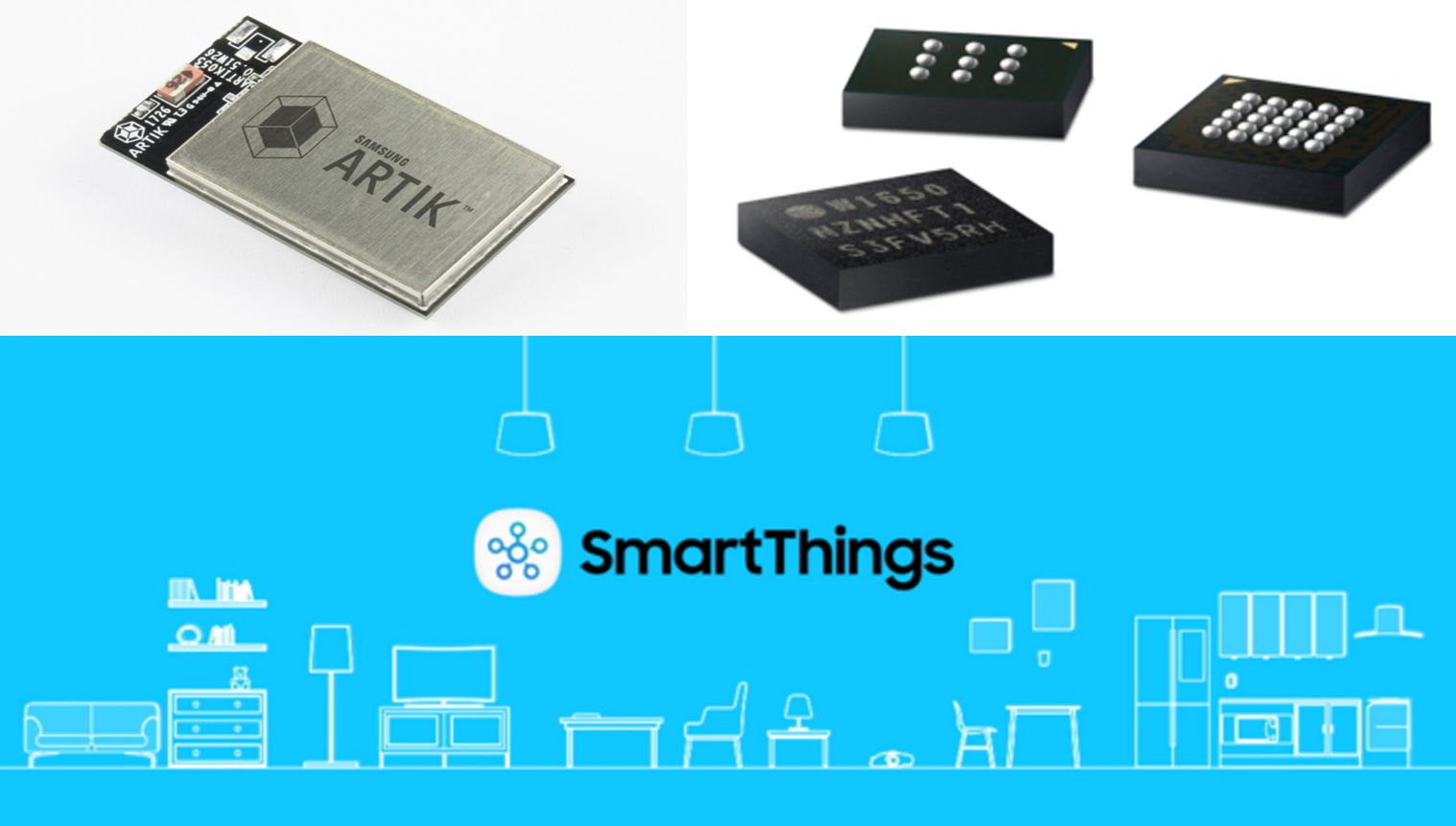
SmartThings Cloud will build one of the world’s largest IoT ecosystems, providing the infrastructure needed for a connected versatile and holistic consumer experience.
With SmartThings Cloud, developers will have access to one cloud API across all SmartThings-compatible products to build their connected solutions and bring them to more people. It will also provide secure interoperability and services for business developing commercial and industrial IoT solutions.
Next generation AI based on voice assistant Bixby
Samsung is moving intelligence beyond devices and into a ubiquitous, personal and open ecosystem with introduction of Bixby 2.0 with SDK, integrated with Viv technologies thanks to the fact that the Korean multinational acquired Siri’s father own company Viv Labs.
Bixby 2.0 will be available on a wide range of devices including Samsung Smart TV and Family Hub refrigerator, not only, as it was announced last Summer, on some Samsung smartphone models.
Further, it was announced at the conference that eginning in 2018, Samsung will offer Bixby-enabled TVs in the US and Korea.
Now on, Samsung puts this AI voice assistant at the center of its consumers’ intelligent ecosystem.
This move follows the same approach previously adopted by Amazon, Appple, and Google, but Samsung brings a new open and AR combined twist to the trend.
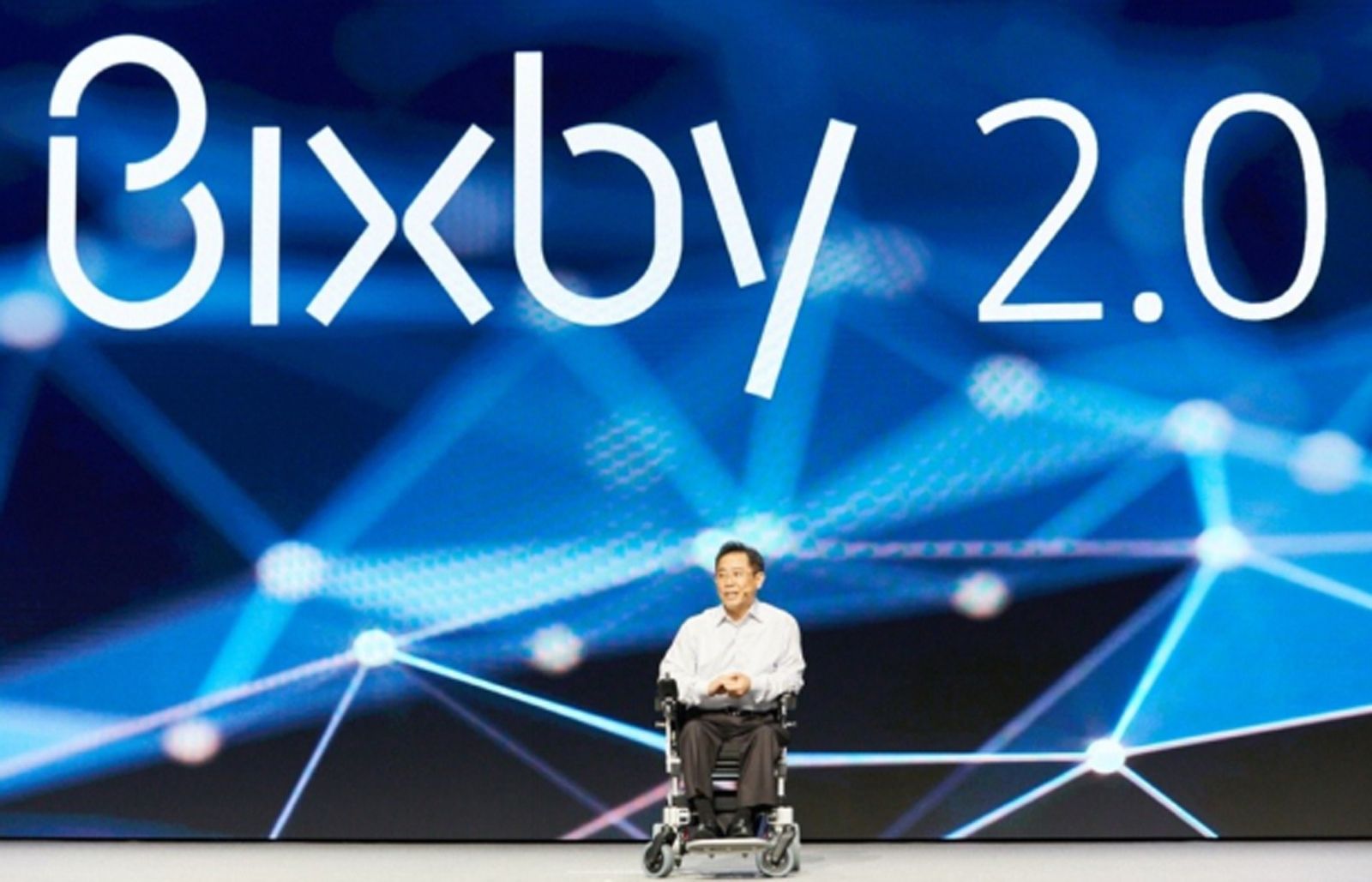
Bixby 2.0 will introduce deep linking capabilities, and enhanced natural language abilities to better recognize individual users, and create a predictive, personalized experience that better anticipate their needs.
In order to build this faster, easier and more powerful intelligent assistant platform, Samsung will provide the tools to bring Bixby 2.0 into a wider number of applications and services.
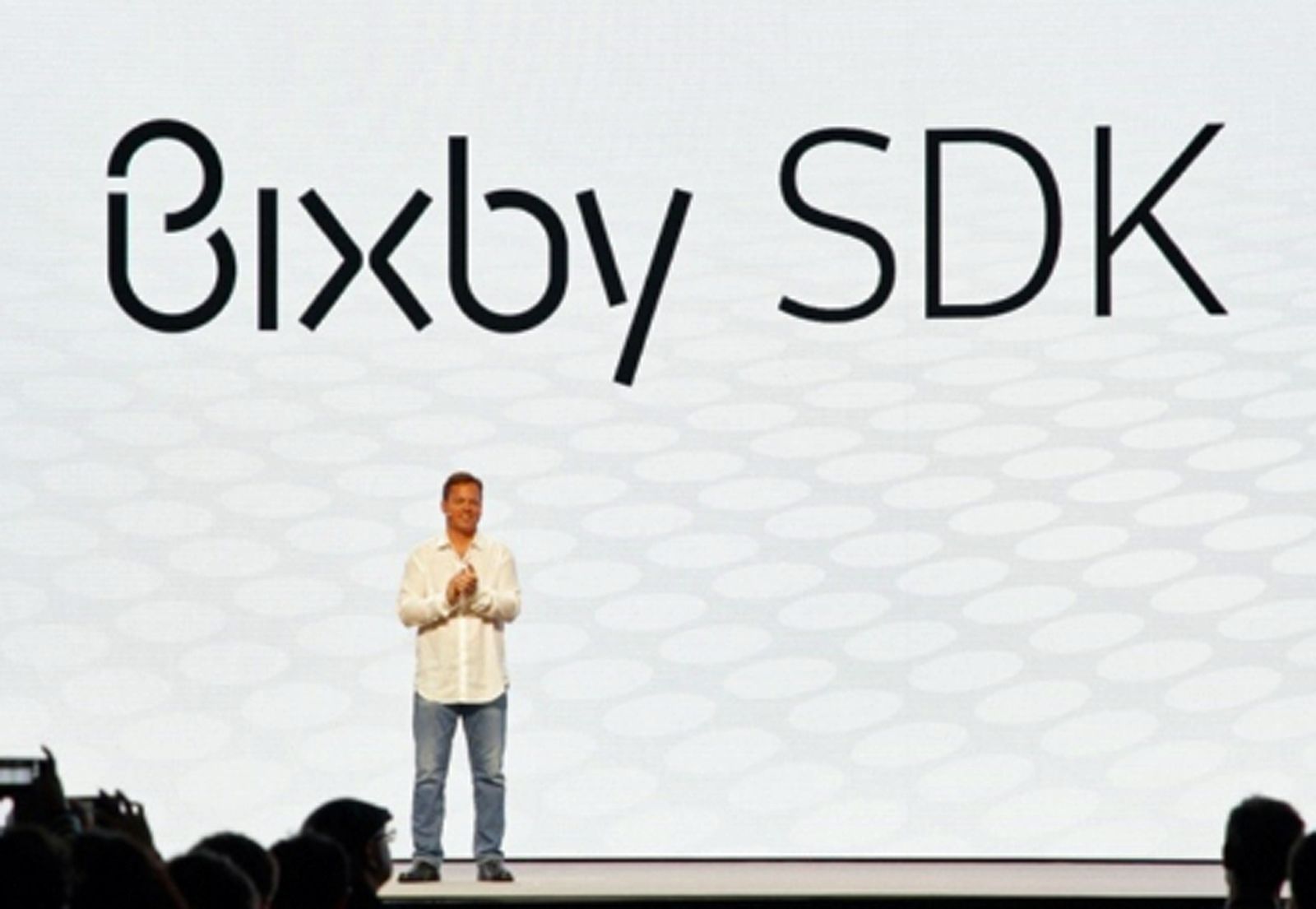
The Bixby SDK will be available to select developers and through a private beta program, with general availability coming in the near future.
Finally, and most importantly, Bixby 2.0 will be open, as Samsung knows that cannot deliver on this paradigm shift by theirselves. It can only happen if we all, across all industries, work together, in partnership.
With Bixby 2.0, the doors will be wide open for developers to choose and model how users interact with Bixby in their services across all application domains e.g., sports, food, entertainment, or travel. The opportunities are truly endless, said Eui-Suk Chung (Executive Vice President and Head of Service Intelligence of Mobile Communications Business at Samsung Electronics).
Launched earlier this year, First version of Bixby is inside Galaxy S8 and S8+ and the Note 8 and available in over 200 different countries, with more than 10 million registered users. But this is just the first step, Eui-Suk Chung underscored.
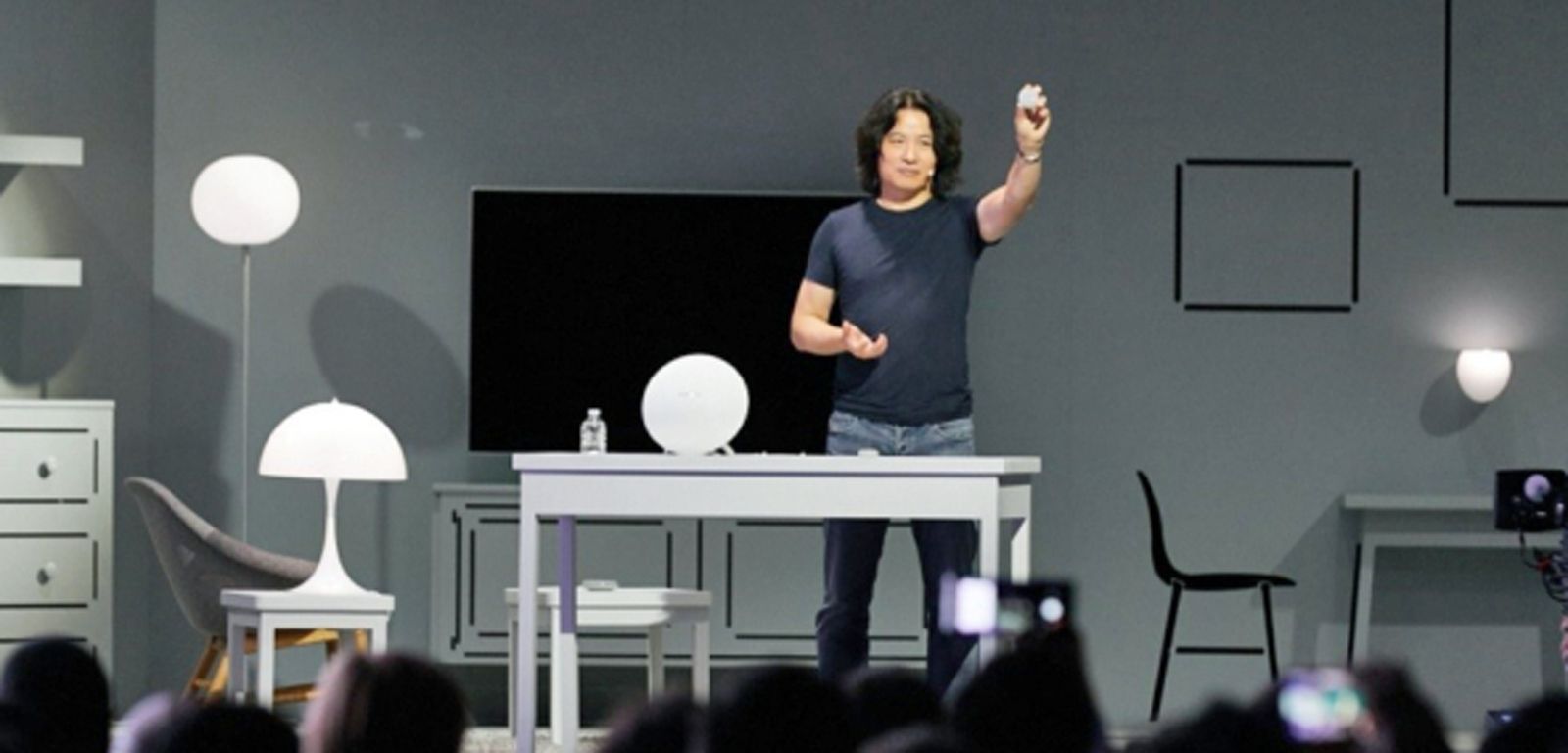
Injong Ree (Samsung Electronics’ Chief Technology Officer and Executive Vice President of Software and Services) unveiled and showed how it works Project Ambience, a small dongle or chip that can be applied into a wide variety of objects, allowing them to seamlessly connect, and create a ubiquitous Bixby experience. This is Samsung’s concept for next generation of IoT, that of the “Intelligence of Things,” which combines IoT and AI to make people’s life easier.
New approach for an easy to use smart home that looks beyond your own house
Samsung believes in a future where our digital world is as ubiquitous and essential as electricity, with security so effective you almost won’t have to think about it. It will just work, on demand and just the way you want it; no need to interact with many different apps to achieve results.
The objective is delivering a truly integrated experience that touches every single “thing” around the customers, while ensuring privacy and security.
With Samsung Connect that brings together appliances, TVs and other everyday items (such as lightbulbs and locks) to one touch control on your smartphone, with ARTIK as Samsung’s secure IoT platform, and with SmartThings’ open and easy integration solution , the Korean tech company is closer than ever in transforming the “smart” home fantasy into a reality.
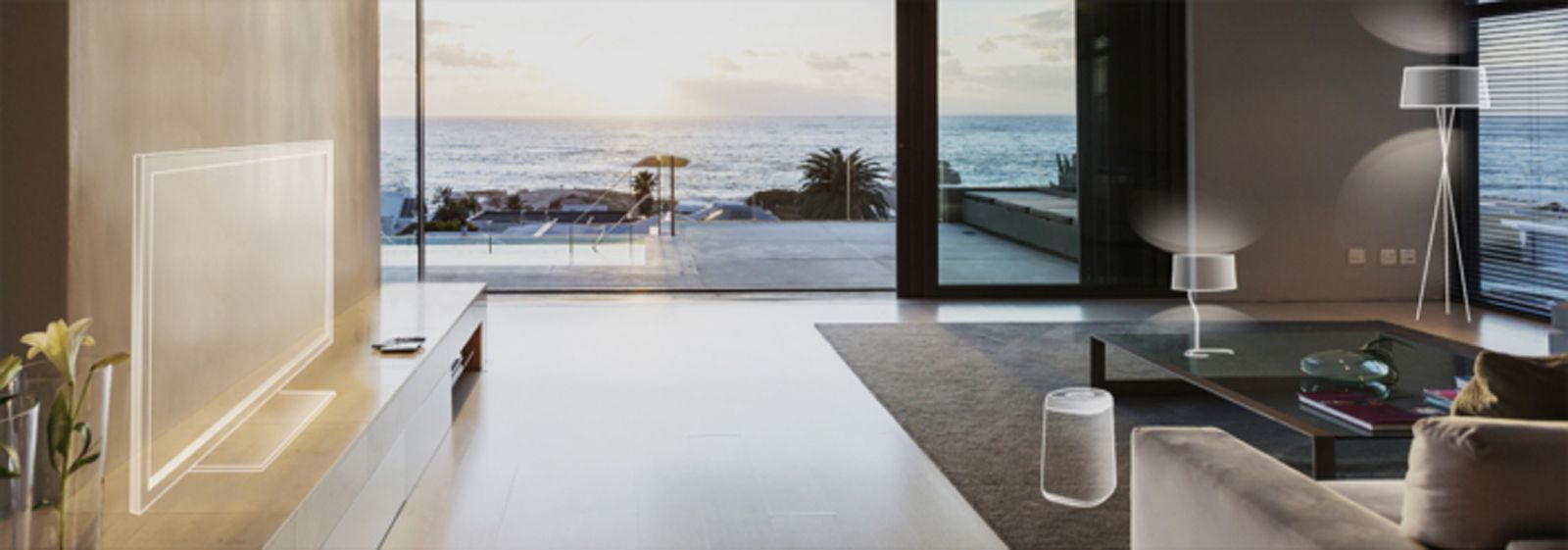
What’s more, with the introduction of new cellular network infrastructure that can better support IoT, Samsung is looking to expand the IoT experience beyond the boundaries of the smart home. Most importantly, they are removing the barriers and bringing them all together in one, integrated IoT experience.
The newly united SmartThings will be an open ecosystem, ready to work with not only Samsung devices, but a wide range of connected devices. From early next year, consumers will have the freedom to choose from the world’s broadest range of IoT devices and control them using just a single app. Whether it’s price or design or functionality driving their purchase decision, users can now select devices that suit their budget and lifestyle with no constraints.
This spirit of simplicity is also relevant to developers, as they need to code for just one single API to give their products and services instant compatibility across over 1Bn devices.
AR for the everyday life with Bixby and and partnering with Google developers
The Korean tech multinational is committed to keep on advancing technologies in AR. Through a partnership with Google, developers will be able to use the ARCore SDK to bring AR to millions of Samsung consumers on the Samsung Galaxy S8, Galaxy S8+ and Galaxy Note8. This strategic partnership with Google offers new business opportunities for developers, and a new platform for creating immersive new experiences for consumers.
Samsung builds upon the experience treasured through the development and launch of technology that delivers incredible experiences to unlock new realities such as VR (Virtual Reality) and eyes going a step further, making AR something not only divertido, but useful for our everyday lifes.
Consider the Galaxy series, which has redefined standards for mobile cameras with dual-pixel sensors and advanced optics. By adding machine learning and computer vision to the equation, Samsung has transformed the camera into a means of comprehending and contextualizing the world quickly and accurately recognizing the people, places and things in front of them.
That’s where Bixby Vision comes in. Samsung introduced Bixby Vision earlier this year, further expanding the AR capabilities. Bixby Vision offers a new way to understand the world, seamlessly integrated into your smartphone camera. It provides a better understanding of the world through objects, scenes and text.
Using the camera app and photo gallery, Bixby Vision uses a hybrid deep learning system that allows it to run on both the device and in the cloud, so it can better identify objects and provide new ways of understanding and engaging with the world around you.
As Samsung continues to build innovative applications and expand the AR capabilities of our devices, the company envisions a future in which digital experiences like AR break through to wide consumer adoption, providing users with a powerful new experience in their daily lives.
Imagine the possibilities beyond gaming and entertainment. Municipalities can install digital signposts which overlay directions for visiting tourists. Businesses have the potential to train new employees on safety procedures for new machines and equipment with virtual guides. Those are just some examples. Opportunities seem endless.
Image over the headline.- During his speech, DJ Koh ( President of Mobile Communications Business, Samsung Electronics) announced that Samsung will unite its IoT services – including Samsung Connect, SmartThings and ARTIK – into a powerful, integrated platform called SmartThings, which will go beyond smartphones and ultimately unite the world’s largest ecosystem of mobile devices, appliances, TVs and IoT sensors. © Samsung.
Related eastwind Marketing links:
Samsung, unveils Bixby, its firs A.I. voice interface
Samsung acquires Siri dad’s artificial intelligence platform Viv