Two thirds of the world’s digital display advertising (67%) will be traded programmatically by
2019, up from 59% in 2017, according to Zenith’s Programmatic Marketing Forecast, published today. The value of advertising sold programmatically will rise from $57.5Bn in 2017 to $84.9Bn in 2019, growing at an average rate of 21% a year.

Zenith explains that programmatic trading has evolved far from its roots of building cheap coverage from remnant inventory. It now often occurs in premium environments, using private deals in which agencies can use their scale and relationship with publishers to ensure their clients ads are displayed in the right place and at the right price.
USA 1st market by value, Canada by percenteage
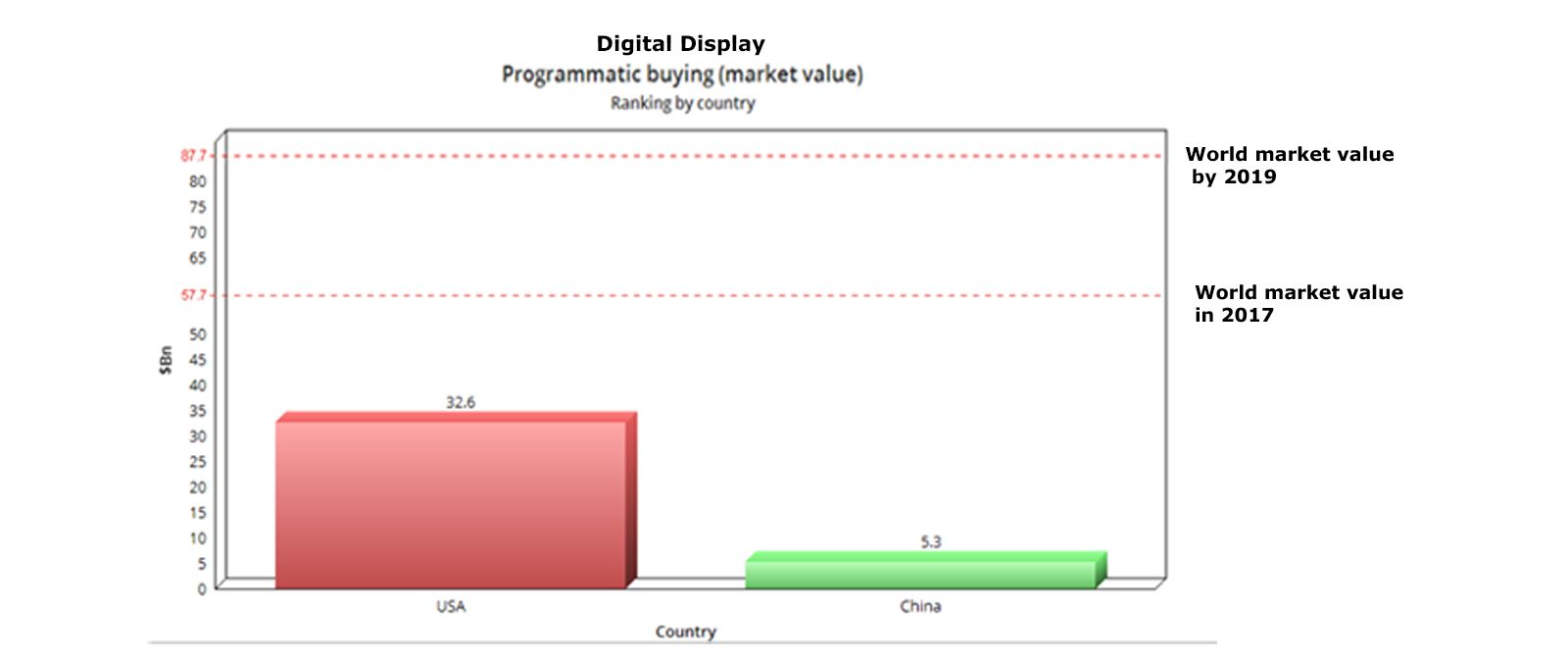
The US is by far the largest programmatic market, valued at $32.6Bn (57% of the global total) in 2017. China comes next, at $5.3Bn. Just 29% of digital display advertising is traded programmatically in China at the moment, so there is scope for plenty of future growth here.
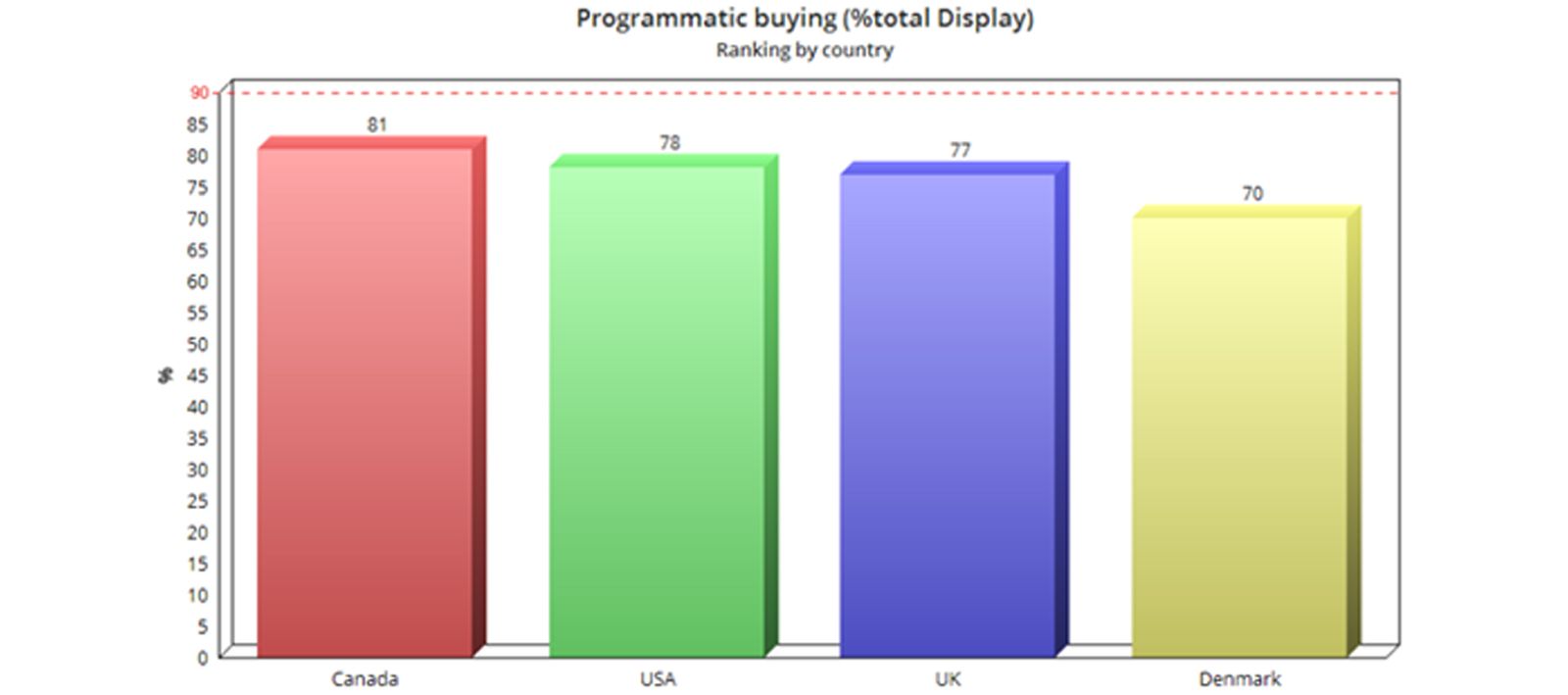
Programmatic trading is most advanced in three English-speaking markets: Canada, the US and the UK, where Zenith estimates 81%, 78% and 77% of digital display advertising will be bought programmatically this year respectively. Denmark is in fourth place, with 70% of display being traded programmatically, followed by France, at 63%.
“The most advanced display markets will be 90% programmatic by 2019. It won’t be many years after that until the global display market is fully programmatic,” said Jonathan Barnard, Zenith’s Head of Forecasting and

Director of Global Intelligence. “The question then is how rapidly programmatic techniques will spread to other media. We will be keeping a close eye on developments in the US as a guide to likely developments in the rest of the world.”
Data and machine learning, the key to success
The key to success is the ability to create unique data sets that deliver unique competitive advantages, usually based on first-party data or data partnerships, and to apply these datasets to tailor brand messages and communicate them at the points most likely to move consumers along the consumer journey. Some agencies are going further by modelling these datasets to optimise their programmatic activity. This is the case of Zenith, that started to apply machine learning to attribution modelling last year delivering, as assured by the media agency, a double-digit gain in performance for theirclients.
“Brands are tying together programmatic technology with unique consumer datasets and machine-learning to

optimise their digital communications,” said Vittorio Bonori, Zenith’s Global Brand President. “This allows them to respond in real time to consumer behaviour and continually improve upon campaign results, delivering greater brand growth.”
Spreading from digital to traditional media
Programmatic techniques are starting to spread from internet advertising to other, more ‘traditional’ media, Zenith points. In most markets this is in the very early stages and too early to forecast, but it is starting to take hold in the US.
Zenith estimates that $5.6bn will be spent programmatically across television, radio, cinema and outdoor in the USA this year, representing 6.0% of total ad expenditure in these media. By 2019 programmatic buying in the mentioned traditional media is expected to rise to $13.0Bn, or 13.6% of the total.
Image over the headline.- © Zenith