Facebook announced today the opening of the Messenger Platform (in beta) to the use of bots. This makes it possible for developers, business or whoever that is able to create a bot to connect with the more than 900 million people around the world who use Messenger every month.
No matter if the user is building apps or aiming to share experiences, weather updates, confirm reservations at a hotel, or send receipts from a recent purchase, bots make it possible for the sender of the message to be more personal, more proactive, and more streamlined in the same way that people interact with each other.
Approval by Facebook needed to run the bot on Messenger
Starting today, all developers and businesses will be able to build bots for Messenger, and then submit them for review.
Facebook says that the company will gradually accept and approve submissions to ensure the best experiences for everyone on Messenger. “We’re putting people first with new guidelines, policies and controls to offer the best interactions we possibly can.”
No need to download an app, the same bot runs on Android, iOs and Web
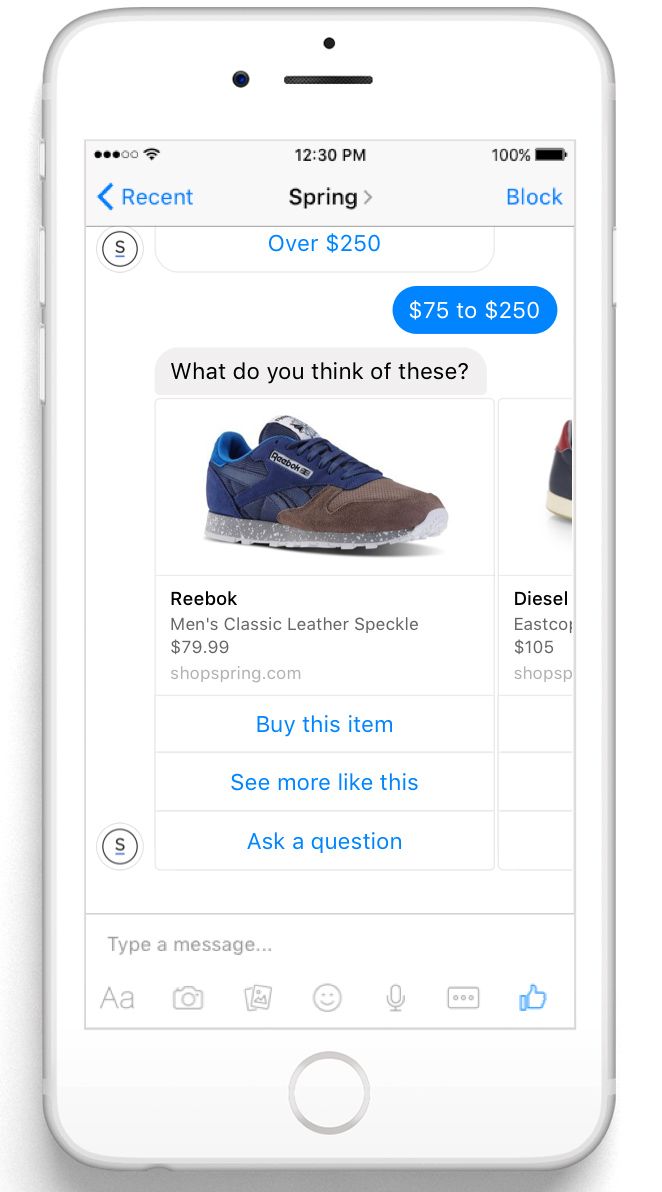
Building just one bot, and the experience, mesage, service etc. is made available on all platforms where Messenger exists, including iOS, Android, and web.
Messenger bots also avoid the need for the comapny’s clients to download one more app, on top of all the apps they already have and may not use.
Three main capabilities for bots
Bots can send/receive an API. This means that the developer or owner of the bot can send and receive text, images, and rich bubbles with calls to action.
People who receive the message sent by the bot will face an easy to use and easy to manage communication thanks to the Generic Message Templates.
The template appproach is rooted in the belief that people prefer to tap buttons and see beautiful images, rather than learn a new programming language to interact with the bot.
The templates provide structured messages with call to actions, horizontal scroll, urls, and postbacks.
And the welcome screen let people that have discovered the bot enter the conversation. Then, they see the brand, the company’s Messenger greeting, and a call to action to “get started”.
Messenger bots can also chat with the customer
To complete the functionality of bots for Messenger, Facebook is introducing another tool to facilitate more complex conversational experiences, leveraging the learnings obtained with M.
The wit.ai Bot Engine enables ongoing training of bots using sample conversations. This enables you to create conversational bots that can automatically chat with users. The wit.ai Bot Engine effectively turns natural language into structured data as a simple way to manage context and drive conversations based on your business or app’s goals.
Easy to find for the clients in the Messenger platform
Facebook has taken steps to make it as easy as possible for the customers to discover the company on Messenger.
The business can use Web plugins, Messenger Codes, Messenger Links, or Messenger Usernames.
Facebook has also focused on the ecosystem that developers use, enabling many platforms that have made it even easier to access Messenger tools, including Shopify, Twilio, and Zendesk.
For businesses that already take advantage of using SMS for real-time communication (the like of food delivery is at your door or your ride is outside). With customer matching tools, Facebook has built a new way for these kind of comnpanies to easily transfer those conversations to Messenger.
Image over the headline.- Some bots running on Messenger platform (including one of the CNN). © Facebook.
Related external links:
New guidelines and policies for approval
Related Eastwindmarketing links:
MWC 2016.- Zuckerberg announces social VR group and partnership with Samsung